Revisiting the Legacy of Alexander Karatheodori
The Franco-Hellenic Applied Dialogues held their sixth conference on Monday, 11 and Tuesday, 12 May in Nea Orestiada, Greece. The conference sought to contribute to the timely public debate on geopolitical uncertainty, the crisis of International Law, and the role of diplomacy in the contemporary world.
The event stood out for its originality. The dialogue between Greek-speaking and French-speaking experts offered a distinctive perspective on the current international landscape, at a time when Greek and French positions are significantly converging. The conference also succeeded in connecting historical reflection with broader considerations regarding the present and the future.
The conference opened with a tribute to Alexander Karatheodori, head of the Ottoman delegation at the Congress of Berlin (1878). Discussions explored whether, and to what extent, knowledge of the distant past can illuminate today’s geopolitical dilemmas. Particular emphasis was placed on how the diplomatic acumen of the Phanariot statesman Alexander Karatheodori contributed to addressing geopolitical threats in the nineteenth century. Professor Stefanos Geroulanos, a descendant of the family, spoke extensively about Karatheodori’s legacy and intellectual contribution, as a source of inspiration and optimism amid today’s profound international turbulence.
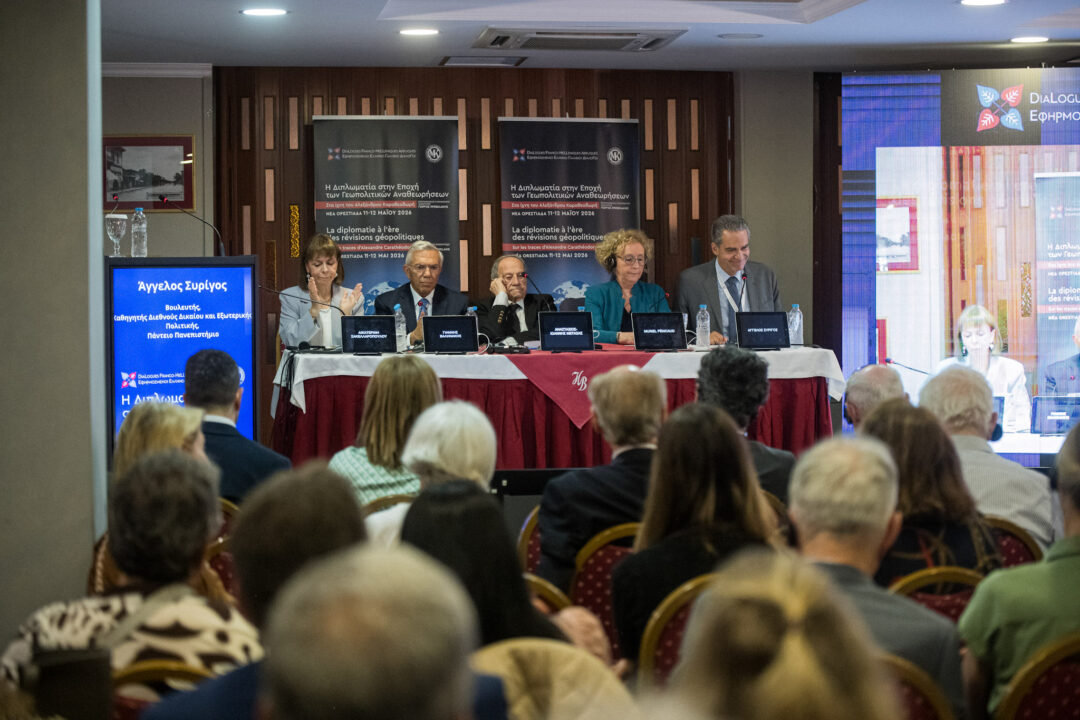
The event brought together distinguished figures from politics, diplomacy, and academia. The keynote speaker was Herman Van Rompuy, who served as President of the European Council during the Greek financial crisis. He delivered a comprehensive assessment of the European project in the current international context, underscoring the need for unity, courageous leadership, and the revival of the spiritual and intellectual dimension of European integration. He was introduced by former Prime Minister Panagiotis Pikrammenos.
The Conference was also sponsored by the Ministry of Foreign Affairs within the framework of public diplomacy initiatives.
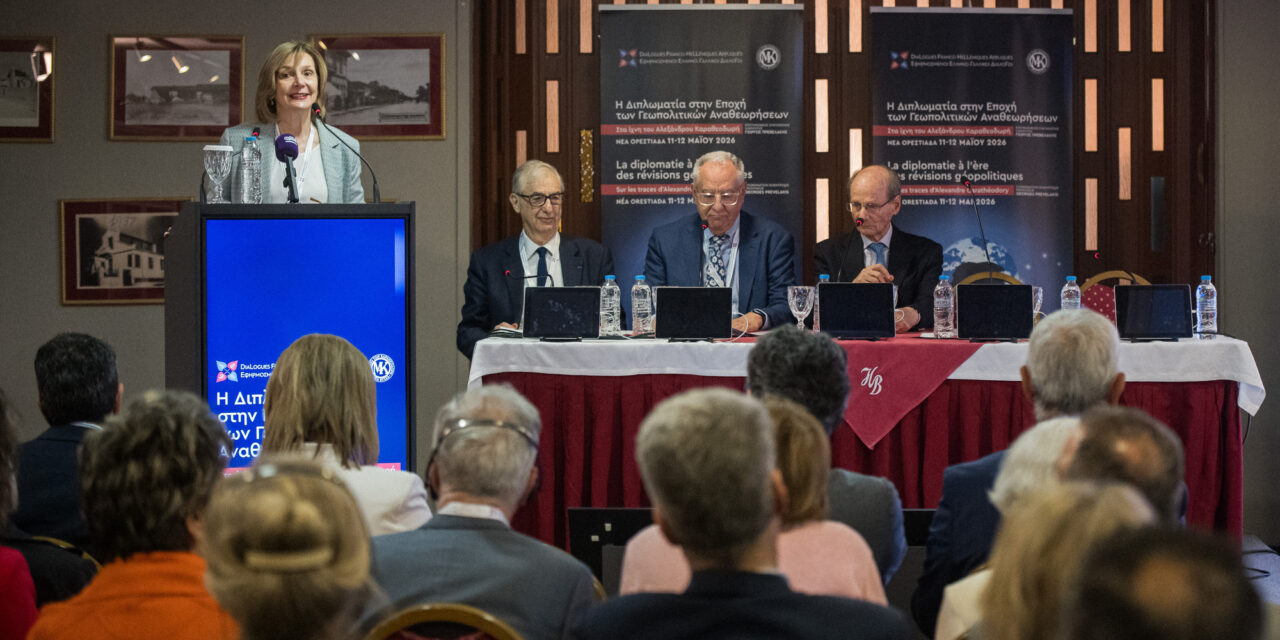
Director General for Public Diplomacy of the Ministry of Foreign Affairs, Ms. Katerina Koika, addressed the audience, highlighting the symbolism of the border town of Orestiada as Thrace has historically been a crossroads of civilizations and significant geopolitical and historical developments.
Ms Koika stated that in an era of profound geopolitical shifts, initiatives such as this conference, contribute to a deeper understanding of contemporary challenges and the promotion of dialogue, cooperation and mutual understanding. She also referred to global challenges, such as energy security, migratory pressures, rapid technological advancement, Artificial Intelligence, and increasingly sophisticated disinformation campaigns undermining the integrity of information.
Ms Koika particularly focused on public diplomacy, not merely as a tool for crisis management but also a force of prevention, a bridge of understanding, and a mechanism for building trust and stability within the framework of a modern and multidimensional foreign policy.
Among the speakers were former President of the Hellenic Republic Katerina Sakellaropoulou, Dimitris Avramopoulos, Angelos Syrigos, Stelios Perrakis, and Anastasios-Ioannis Metaxas, alongside other distinguished academics and researchers. Former French Minister of Labour Muriel Pénicaud, former Director of the OECD Development Centre Mario Pezzini, demographer Gérard-François Dumont, geographer André Louchet, and other scholars further reinforced the international dimension of the discussions.
The first part of the conference focused on geopolitical developments. Participants examined the evolving relationship between maritime and continental powers and the implications of technological change, which increasingly complicate the safeguarding of freedom of navigation. Particular attention was devoted to major demographic transformations, the crisis of the West, and the rise of countries of the Global South.
The second part highlighted the reforms and adaptations required to strengthen the role of international organizations and diplomacy. Speakers denounced the excessive pessimism that often leads to inertia and aggravates adverse developments. It was emphasized that the international community and diplomacy are rooted in deep historical traditions and, despite current challenges and uncertainties, are unlikely to disappear.
Nea Orestiada, birthplace of Alexander Karatheodori, provided a distinctive setting for the conference. The “Karatheodori Family Heritage Association” played a decisive role in welcoming participants and guiding them through the region, with particular emphasis on the Karatheodori Museum. Emeritus Professor of the Sorbonne Georges Prevelakis, in coordination with Professor Stefanos Geroulanos and in collaboration with Mr Panagis Kalantzis, Director of In Session Events, conceived the thematic framework of the conference and contributed significantly to the organization and smooth conduct of the discussions.
The Ethnological Museum of Thrace, together with its director Mrs Angela Giannakidou, as well as Mrs Katerina Xyla, President of the Hellenic Cultural Centre, also made an important contribution to the successful organization and implementation of the conference.
Through this initiative, the Franco-Hellenic Applied Dialogues highlighted the importance of historical and geographical knowledge, international cooperation, and diplomacy as essential tools for understanding and addressing today’s global challenges.