The Digital Management of the Archive of the Hellenic Institute for Byzantine and Post-Byzantine Studies of Venice has recently been completed and is already operating through the digital infrastructure of the Aristotle University of Thessaloniki, making it accessible to a global audience. It offers free access to an invaluable treasury of materials—including registers, documents, heirlooms, icons, works of art, miniatures, manuscripts, and early printed books—and sheds light on the historical trajectory of the Greek diaspora from the 15th to the 20th century.
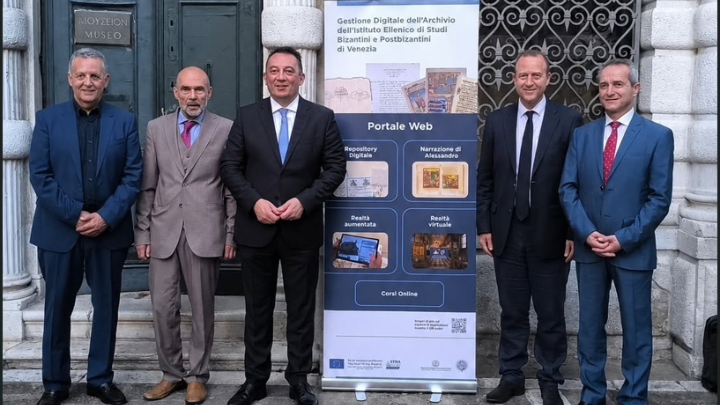
As was emphasized during the events held following the completion of the project, the Archive of the Greek Community, and later the Archive of the Hellenic Institute of Venice, constitutes one of the most valuable cultural assets to have been digitized in recent years. The archival holdings date from 1498 to 1954 and document the history of the Greek Brotherhood in the city of the lagoons, as well as that of the broader Greek population under Venetian rule. These records, however, are far more than the documentation of routine administrative procedures—they are living history. (Cover photo: Deputy Minister of Education K. Vlasis and the contributors of the digitization program in Venice)
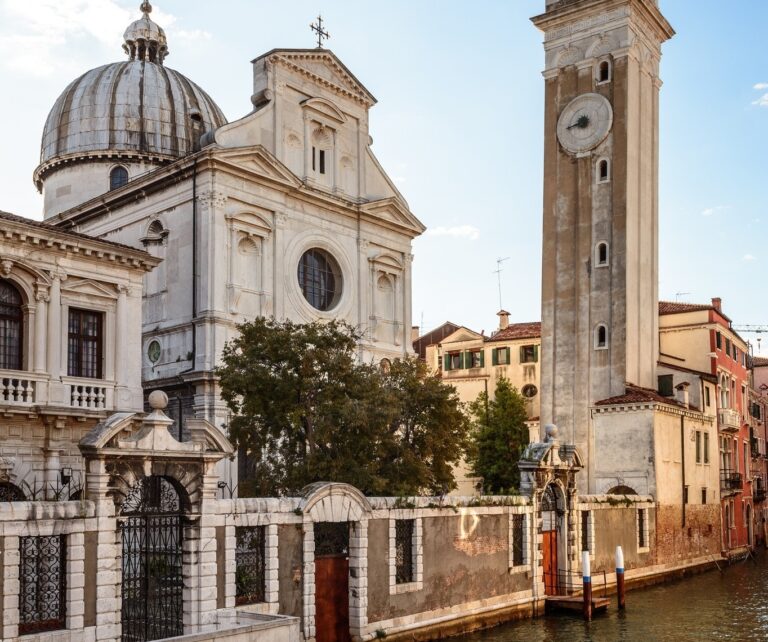
The reconstruction of the church of St George began in 1536, on land purchased a few years earlier by the Greeks of Venice and was completed in 1577. The work was supervised by the architects Sante Lombardo and Zuanantonio Chiona, while the well-known architect Andrea Palladio was the consultant for the construction of the women’s balcony. The church was decorated with icons brought by refugees from Constantinople, such as the Grand Duchess Anna Paleologina Notara, but also from other regions, with works by important painters such as Michael Damaskinos, Emmanuel Tzanes Bounialis, Thomas Bathas and others. The illustration of the dome was entrusted to John the Cyprian, who worked under the supervision of the remarkable Venetian painter Jacopo Tintoretto. (Photo: https://www.ertnews.gr/)
Thirteen years after the Fall of Constantinople (1453), the great wave of exodus from the Byzantine capital—a migration that would permanently alter the course of European history—carried thousands of scholars, philosophers, and theologians to the Italian peninsula. They brought with them precious ancient Greek manuscripts in what may be regarded as the first great “brain drain” to the West. They were followed by heirs of the Byzantine Empire, architects and mosaic artists, painters, craftsmen, aristocrats, members of the imperial court, descendants of noble families, former soldiers, and many others. Venice became their principal destination, owing both to its extensive maritime trade network and to the presence of an already established Greek confraternity. This community would soon develop into one of the most important strongholds of the Greek diaspora and the foremost center of Hellenism in Italy before the Greek War of Independence of 1821.
The formal establishment of the first Greek Community in Venice in 1498, at a time when approximately 5,000 Greeks lived in the city, and the construction of the Orthodox Church of St. George a few decades later, mark what historians describe as a milestone in the history of Hellenism. It was the first organized Greek community, founded some 333 years before the establishment of the modern Greek state.
For five centuries, the Greeks of Venice have maintained a continuous presence, preserving—as the Greek Deputy Minister of Education, Konstantinos Vlasis, aptly remarked in a public address—”the language, the faith, the educational tradition, and the identity of Hellenism.” From the late fifteenth century onward, they played an active role in every major period of the nation’s history. Following the end of the Second World War, the movable and immovable property of the Greek Community, together with its few remaining descendants, was transferred to the Hellenic Institute of Byzantine and Post-Byzantine Studies in Venice. Today, the Institute stands as the historical continuation of that Community, preserving its legacy across both time and place.
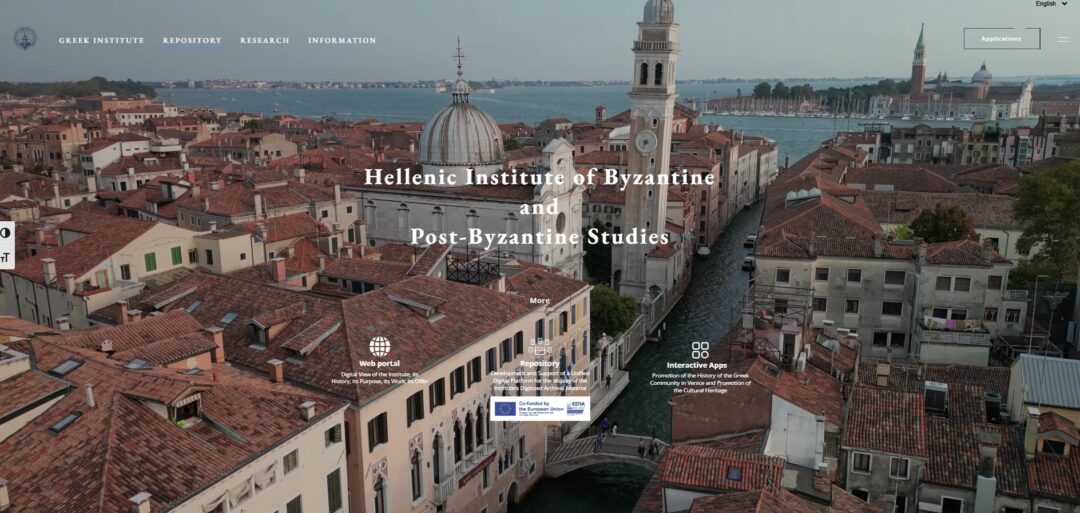
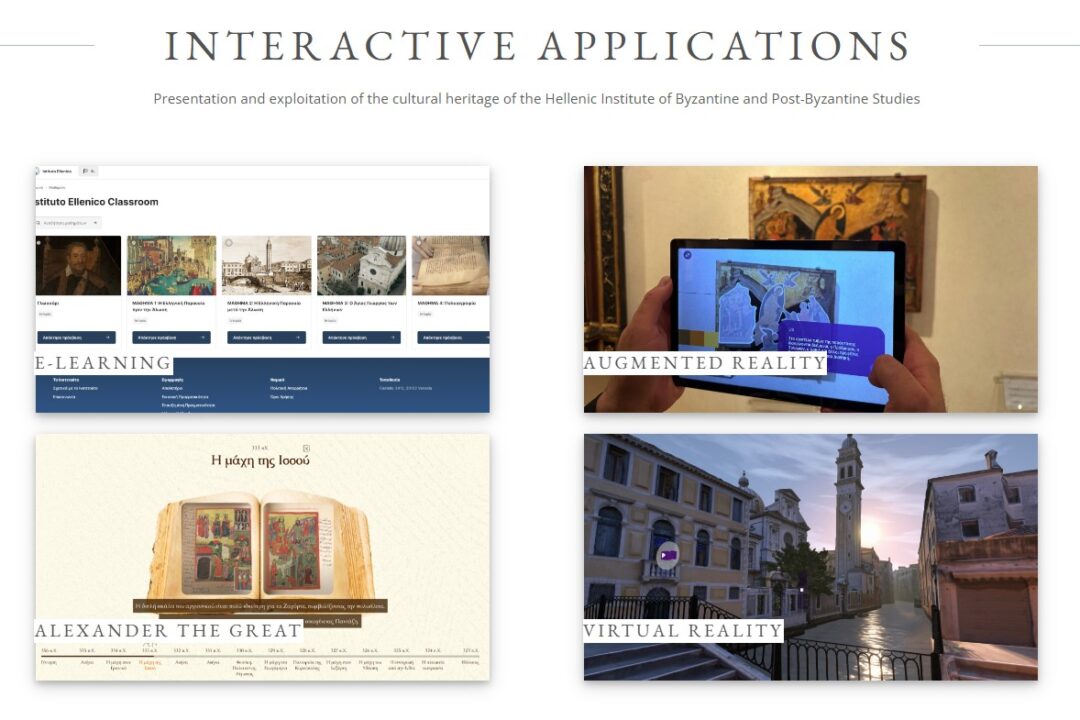
The Institute’s Digital Repository now presents to the world hundreds of its rare printed books, most of them in Greek (148), Italian (123), Latin (105), and French (81). As reported to the Athens-Macedonian News Agency (APE-MPE), the program coordinator, Professor of the Aristotle University of Thessaloniki, Ch. Arabatzis, stated that a total of 140,000 documented records are now accessible in high resolution and with thorough documentation to every student, specialized researcher, and interested citizen. This includes approximately 1,000,000 digital images, 10,000 items of images and ecclesiastical artifacts, 1,000 rare printed books, and 47 valuable Byzantine manuscripts. An important aspect of the program was the development of applications with a clear educational orientation. ‘Students and university learners no longer study copies or editions—they work essentially with the original sources themselves, in their physical form and chronological sequence.’ He added that the completion of the project represents an important step in linking Greek cultural institutions with corresponding European programs that are gradually being integrated into Europeana.”
“The Digital Management of the Venetian Archive is a project of exceptional scholarly and national importance,” Professor Stratos Stylianidis, former Vice Rector of the Aristotle University of Thessaloniki, told the Athens-Macedonian News Agency (ANA-MPA). “It brings to light,” he added, “through the use of advanced digital technologies, an invaluable archival heritage of Hellenism. It constitutes a unique testament to the historical memory, intellectual continuity, and cultural presence of the Greeks within the European world.” According to Professor Stylianidis, a faculty member of the Faculty of Engineering at the Aristotle University of Thessaloniki and Vice President of the International Scientific Committee for Heritage Documentation (CIPA – Heritage Documentation), the digital management, documentation, and dissemination of the archive “are far more than a technological intervention. They represent an act of safeguarding our collective memory and an investment in future research, education, and the dissemination of cultural heritage.”
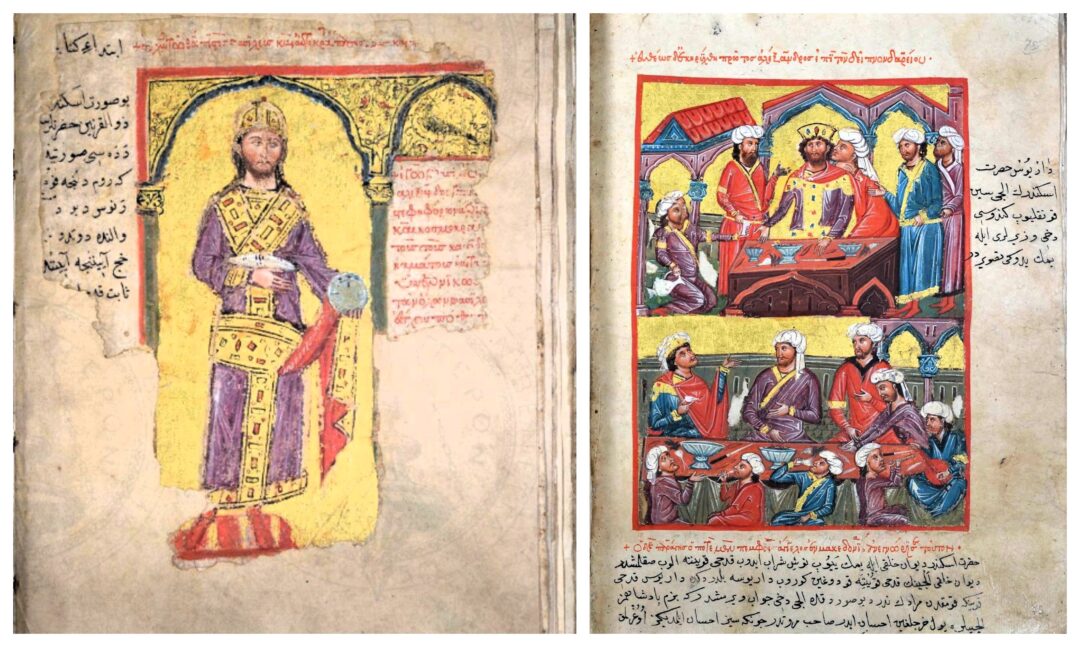
The Alexander Romance by Michael Damaskinos, Theodoros Poulakis, and the Cretan School: Portrait of Alexander the Great standing, dressed in the costume and crown of a Byzantine emperor (left); Alexander the Great dining with Darius (upper right); Alexander the Great conversing with the Gymnosophists (lower right)
Occupying a place of distinction in the new digital portal—as in the cultural heritage of the Greek Community as a whole—is the Alexander Romance, the celebrated and uniquely illustrated fourteenth-century Byzantine manuscript by Michael Damaskinos, Theodoros Poulakis, and the Cretan School (Codex 5, Narrative of Alexander, Pseudo-Callisthenes). The manuscript contains 250 remarkable miniatures embellished with gold leaf, depicting—and imaginatively narrating—the life and legendary exploits of Alexander the Great. Comprising 193 parchment folios bound into twenty-three quires (measuring approximately 32 × 24 cm), the codex recounts the principal events of Alexander’s life. He is portrayed not merely as the ancient Macedonian king but as a Byzantine emperor and protector, embodying the cultural legacy of Hellenism while leading campaigns beyond the boundaries of his empire as both a military leader and a just ruler. The Alexander Romance is a work of imaginative literature that achieved worldwide renown and has been translated into eleven languages. The manuscript’s extraordinary illustrations vividly portray Alexander’s birth and upbringing, his military campaigns, battles, sieges, encounters with foreign rulers, and his death. It is also presented on the digital platform through an interactive application. The Institute also preserves a further forty-seven manuscript books, forty of them in Greek, all of which have now been digitized in their entirety.
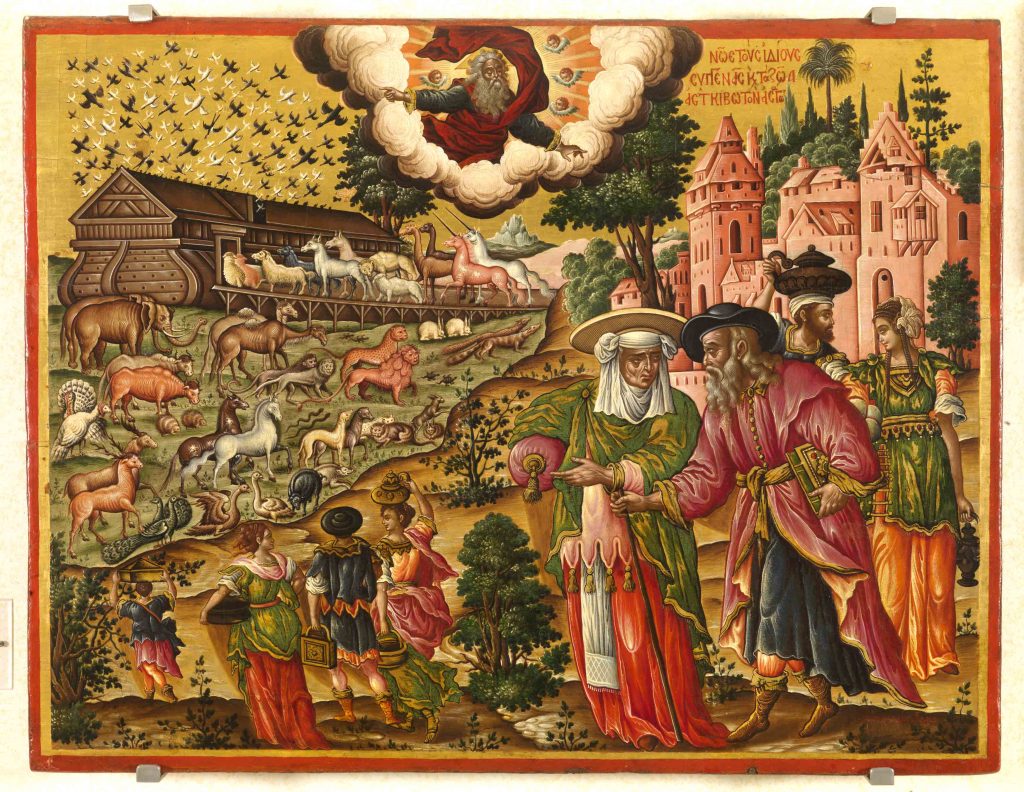
Noah’s Ark, second half of the 17th century, work by Theodoros Poulakis (https://istitutoellenico.org/museum/)
At the top of the digitized and documented images and artifacts are the works of Michael Damaskinos, the distinguished Cretan painter of the 16th century, who managed to ideally combine the strict Byzantine tradition (maniera greca) with the innovations of the Italian Renaissance and the Venetian School (maniera latina) during the period he lived in Venice. The digital archive also presents the entire collection of Orthodox art inherited by the Institute from the Greek Community. This includes masterpieces of Byzantine iconography, such as the icons brought from Constantinople in the 15th century by Anna Palaiologina Notaras, as well as dozens of works by well-known painters: Georgios Klontzas, Emmanuel Lambardos, Victor (painter), Franghias Kavertzas, Theodoros Poulakis, Ioannis Moskos, and Emmanuel Tzanes and Konstantinos Tzanes, among others. This collection allows every visitor to follow the evolution of Cretan painting from the 15th to the 17th century and to be taken on a journey from Byzantium to Crete and Corfu during those centuries. Also available on the same website are impressive icons by unknown artists, such as The Descent into Hades (late 14th century, unknown Constantinopolitan painter), The Dormition of the Virgin (second half of the 15th century, unknown painter from a Cretan workshop), and The Ascension (second half of the 15th century, unknown painter from Candia).
(Source: https://www.amna.gr/)
Read also:
“Alpha Beta: Learning Greek in the West: Byzantium – Italy – Europe”