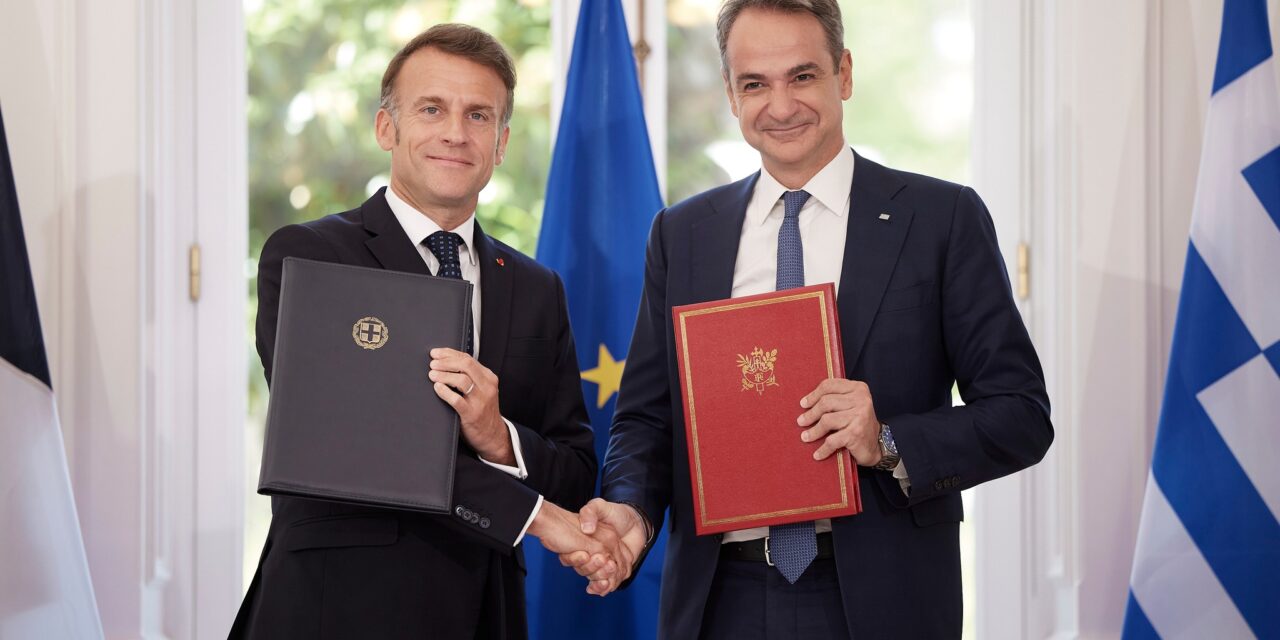
Honorable Mr. President of the French Republic, Ministers, friends, today, Athens welcomes a long-standing European ally and partner, but also a true friend of our country and, if I may say so, a personal friend of mine.
At a moment, in fact, that I would describe as pivotal, as it marks a historic choice made by our two countries in 2021. Namely, the decision by Greece and France to join forces, transforming a long-standing shared journey into a strong strategic alliance.
This essentially represents the development of a multifaceted relationship -a substantive relationship- rooted in the historical ties between our two nations, in our shared principles and values, and in the mutual interests of our peoples. These elements have been forged through our participation in both the North Atlantic Alliance and the European Union, as well as, of course, through bilateral cooperation. And the results, indeed, in the defense sector are more than evident.
I am particularly pleased, dear Emmanuel, that we had the opportunity this morning to visit the frigate “Kimon,” which has just returned after spending 40 days off the coast of Cyprus.
Two more Belh@rra-class frigates of the same type, the “Nearchos” and the “Formionas,” will be delivered in the coming months. The fourth, the “Themistoklis,” will be delivered in 2028, while the capabilities of our Air Force have been substantially upgraded with the delivery and operational deployment of 24 Rafale fighters; we saw two of them, after all, flying over Piraeus today.
But, of course, also through a multifaceted alliance. For instance, I would like to mention the agreement we signed today to upgrade the MICA missiles. All of these measures strengthen our deterrent capability, while also safeguarding both our national and European borders.
At the same time, it is no coincidence that, during the recent crisis in the region, France rushed to bolster the island’s defenses. I have very vivid memories, dear Emmanuel, of our joint visit to Cyprus, together with President Christodoulides, because in this way we demonstrated that European solidarity is built on actions and not just words.
After all, I would like to emphasize that this Greek-French alliance preceded all of the recent major geopolitical realignments.
I would say, therefore, that it proved to be provident and timely in the areas of security and stability. And in its own way, it has been a forerunner of the broader need for strategic autonomy across our entire continent, something that we -at least the two of us- have been discussing for several years now at the European Council.
Through joint programs and co-productions, with operational interoperability: the frigates acquired by the Greek Navy and those acquired by the French Navy are practically identical, but one Navy learns from the other in the process of their ongoing modernization.
And of course, the flagship of these agreements is the mutual assistance commitments. I would like to thank Emmanuel once again because, in such clear terms, he reiterated yesterday that if ever-God forbid- Greece needs France’s support, France will be there.
That is why today we are taking another important step forward. The declaration on the strengthened comprehensive strategic partnership between Greece and France, which we had the opportunity to sign a short while ago, reflects the breadth of our cooperation.
I would like to take this opportunity to thank all the ministries, but above all the Ministry of Foreign Affairs, for their work on the agreements we signed today.
And of course, the updated roadmap of the Ministry of Foreign Affairs provides clear guidance on our diplomatic alignment.
At the same time, we are investing in the future through joint initiatives in education, while strengthening our cooperation within the intergovernmental organization Mercator Ocean International, a key body for marine knowledge and observation, in strategic sectors such as nuclear energy and technology for peaceful purposes. Moreover, I recently had the opportunity to attend a very interesting conference in Paris organized by President Macron on this very issue.
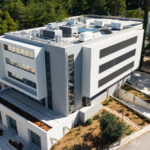
And of course, just a short while ago, the Ministers of Finance inaugurated the Technology and Support Centre of Euronext Athens, as the Athens Stock Exchange is now known. We are putting European integration into practice in the financial transactions sector as well.
And we will soon have the opportunity to speak at the very important Greece-France Economic Forum, which is taking place as we speak.
What do all these things signify? It signifies our desire -Greece and France, France and Greece- to walk together on the path of 21st-century Europe, ensuring conditions of prosperity and security for the present, while also opening up a horizon of hope for future generations.
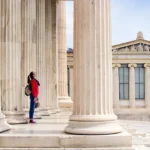
In fact, it was precisely this vision that we discussed yesterday during our conversation at the Roman Agora. A center of public life in antiquity that continues to this day to foster fruitful dialogue and reflection, particularly the pursuit of truth in the age of fake news, dialogue in an age of slogans, and accountability in an era of anonymous digital propaganda.
Dear Emmanuel, when the fundamental principles of the postwar order are put to the test, the response of democracies must be united, level-headed, and resolute.
Consequently, Europe itself -on whose soil, unfortunately, war has returned over the past four years, is called upon to strengthen its autonomy at all levels, because only in this way can it “navigate” with confidence through the turbulent waters of an uncertain world.
And I would like to thank the French President for his truly steadfast efforts to place the issue of Europe’s strategic autonomy, in all its aspects, at the forefront of discussions at the European Council.
I believe that our collective defense will also strengthen our common alliance, NATO, with European member states now obliged to assume greater responsibility for defending our common interests and our common borders, realizing that developments in the North, the East, and also the South, here, in the southeastern Mediterranean, directly affect the security of all of Europe. That is why a far-sighted, genuinely European policy is required.
However, we know well that we cannot achieve strategic autonomy without a competitive Europe. And without competition, there can be no growth or prosperity.
That is why the agenda for boosting competitiveness in areas such as reducing the bureaucratic burden, and affordable energy will be at the center of our discussions in the coming months, with the flagship, of course, being the negotiations on the new Multiannual Financial Framework, which we hope will be completed by the end of 2026.
We did, of course, have the opportunity to discuss developments in the Middle East. Greece, like France, is a reliable partner and a force for stability. We have both played our part discreetly in the ceasefire and in the dialogue between Israel and Lebanon, a very important development that must be strengthened.
We both share the same concern for the protection of all religious communities, especially the Christians in the region, who are not merely a minority but an integral part of its historical identity.
We share the same commitment to safeguarding freedom of navigation, in accordance with International Law and the Convention on the Law of the Sea. And as a non-permanent member of the Security Council, we have raised this issue as one of the utmost importance. This is an issue that Europe as a whole must embrace, and we are, of course, moving in the same direction in view of Greece’s European Presidency in the second half of 2027.
We are ready to help shape all those policies that promote a strong, democratic Europe with a meaningful role in geopolitical developments -a Europe that knows and is able to defend its values as well as its member states.
A Europe of its citizens, ultimately a “child” of both Greek and French culture, a “child” of ancient Athenian democracy, but at the same time a “child” of the European Enlightenment.
Dear Emmanuel, I will conclude by reminding you that as we plan for the future, we are also honoring the past. And right now, Delacroix’s painting “Greece on the Ruins of Missolonghi” is on display at the Xenokrateion Archaeological Museum in Missolonghi.
This work was loaned by the Museum of Fine Arts of Bordeaux, and I would say it is a moving testament to the bonds between our peoples even before the independent Greek State was established, the birth of which, let us not forget, was warmly supported by the French people.
It is no coincidence that France was our guest of honor at this event commemorating the 200th anniversary of the Exodus of Missolonghi. This is a recognition -both symbolic and substantive- of a relationship that remains strong to this day.
We should, therefore, be proud to serve and carry on this historic tradition of peace and cooperation. And I believe that is exactly what we did today.
Once again, welcome to Athens, Emmanuel.
Source: https://www.primeminister.gr/