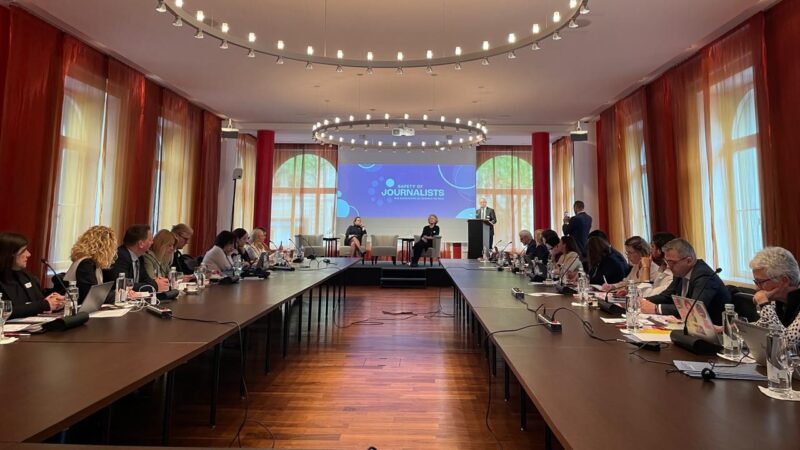
The Secretary General for Communication and Information, Dimitris Kirmikiroglou, participated as Greece’s National Focal Point at the 4th Annual Meeting of National Focal Point Representatives of the OSCE Programme on the Safety of Journalists and Media Freedom, held in Bern, Switzerland on 15–16 April 2026 (cover photo: https://media.gov.gr). Greece has been participating in the OSCE Programme on the Safety of Journalists since August 2022 and has been recognized as a “Spotlight Case” country for the implementation of best practices.
Within the framework of the meeting, which was hosted at the Bernerhof building with the participation of representatives from 25 OSCE member states, the Secretary General for Communication and Information presented Greece’s progress in implementing “Decision No. 3/18” on the Safety of Journalists, adopted by the Ministers of OSCE participating States. In particular, he referred to:
- Law 5253/2025, which incorporates the European Media Freedom Act (EMFA) and establishes the framework for the Hellenic Media Council,
- the National Strategy for Media Literacy,
- the funding of the SLAPP Observatory (strategic lawsuits against public participation) of POESY, and
- the institutional guarantees of editorial independence.
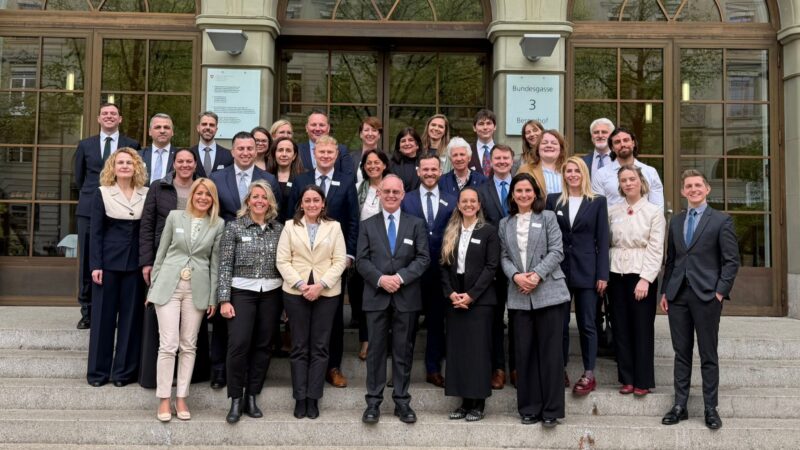
The Representatives of the OSCE National Focal Points for the Safety of Journalists in Bern (Source: https://media.gov.gr)
As Mr. Kirmikiroglou emphasized, “the press is under attack globally—from violence, powerful economic interests, and illiberal regimes that invest in controlled algorithms rather than critical voices. The responses must be collective and decisive. Greece is fully committed to reforms that will strengthen the media and safeguard press freedom as an indispensable prerequisite for a healthy democracy.”
The reforms implemented by the Greek government for the press—as one of the fundamental pillars of the rule of law and democracy—attracted significant international interest during the discussions, highlighting Greece as a reference country for reforms in the field of media.
At the same time, the General Secretariat for Communication and Information, investing in the younger generation, is developing partnerships with universities, establishing Regional Media Hubs to foster local information ecosystems, and implementing the “Cultivating Critical Readers” program in schools across the country.
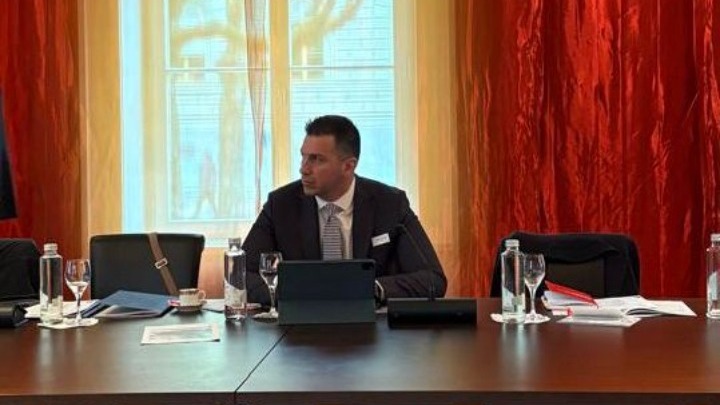
A central element of Mr. Kirmikiroglou’s presentation was the National Action Plan for the Safety of Journalists, as incorporated in Article 40 of Law 5253/2025. This constitutes the country’s first comprehensive strategic framework, with a three-year horizon, for the protection of media professionals. The Plan is structured around eight Strategic Pillars, with specific objectives and Key Performance Indicators (KPIs), and draws on best practices from countries with established experience in protecting journalists. The roadmap for implementing the Action Plan foresees the launch of the consultation process in May 2026, including a series of regional workshops across the country, with completion scheduled for September 2026.
A central role in the Plan is played by the International Training Center for the Safety of Journalists and Media Professionals (ICSJ) at the Aristotle University of Thessaloniki, which serves as an official partner of the OSCE for the 2025–2026 period. In March 2026, the ICSJ organized in Thessaloniki the 3rd Annual International Conference “Bearing Witness: Trauma and Resilience in Modern Journalism,” as well as the 3rd Training School “Journalists’ Safety” at the Multinational Peace Support Operations Training Center in Kilkis.
Speaking at the 3rd Annual International Conference “Bearing Witness: Trauma and Resilience in Modern Journalism,” Mr. Kirmikiroglou had explained that the main pillars of the National Action Plan for the Safety of Journalists will include: physical safety and cooperation with the police and the justice system, following the models of the Netherlands and the United Kingdom; digital safety, including the establishment of a Digital Protection Center and the implementation of Article 4 of the European Media Freedom Act (EMFA) to prohibit the use of spyware against journalists; tackling abusive lawsuits; training and capacity-building; media literacy and public awareness; research, data collection, and continuous monitoring; international engagement; and specific provisions for women journalists, freelancers, and exiled journalists.
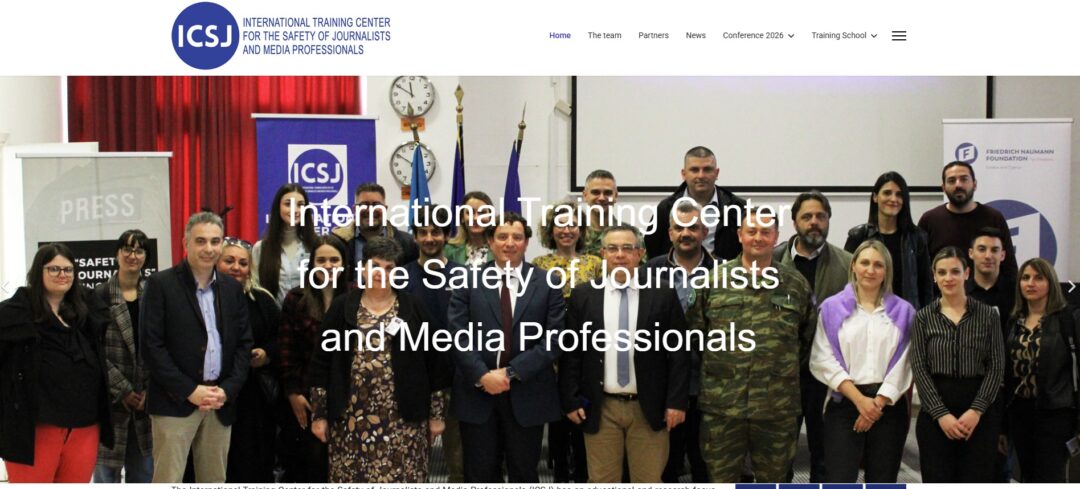
The International Training Center for the Safety of Journalists and Media Professionals (ICSJ)has an educational and research focus. Regarding the educational focus, ICSJ utilizes the material and tools of the academic community and provides specialized training to journalists and media professionals. Regarding the research focus, the center implements extended research on topics related to the safety of journalists and media professionals, both in war zones and in crisis, as well as threats against them, connected with everyday work, such as physical, legal, economic, freedom of expression and cyber security issues. In parallel, ICSJ aims to develop support tools, as well as a supportive network for journalists and media professionals that operate in war zones and crises. ICSJ acts under the scientific responsibility of the Peace Journalism Laboratory, Department of Journalism and Media, of the Aristotle University of Thessaloniki.

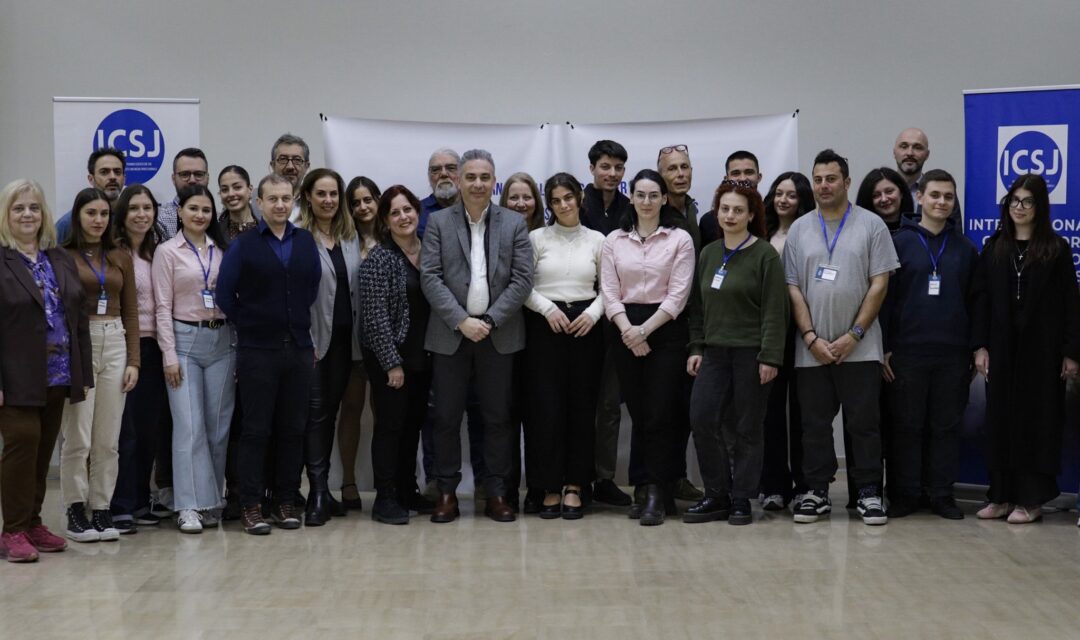
Bearing Witness: Trauma and Resilience in Modern Journalism. A moment captured at the close of the 3rd Annual International Conference on Journalist Safety. Two days of meaningful dialogue, shared expertise, and a collective commitment to a safer and more trauma-informed media landscape. The International Training Center for the Safety of Journalists and Media Professionals (ICSJ), under the scientific responsibility of the Peace Journalism Laboratory of the Aristotle University of Thessaloniki, remains committed to advancing this work through specialized training, research, and support for journalists in war zones and crisis environments.
(Source: https://www.facebook.com/icsj.net/)
Read also:
Greece Strengthens Global Efforts to Protect Journalists and End Impunity
TAGS: JOURNALISM | MEDIA | SAFETY OF JOURNALISTS