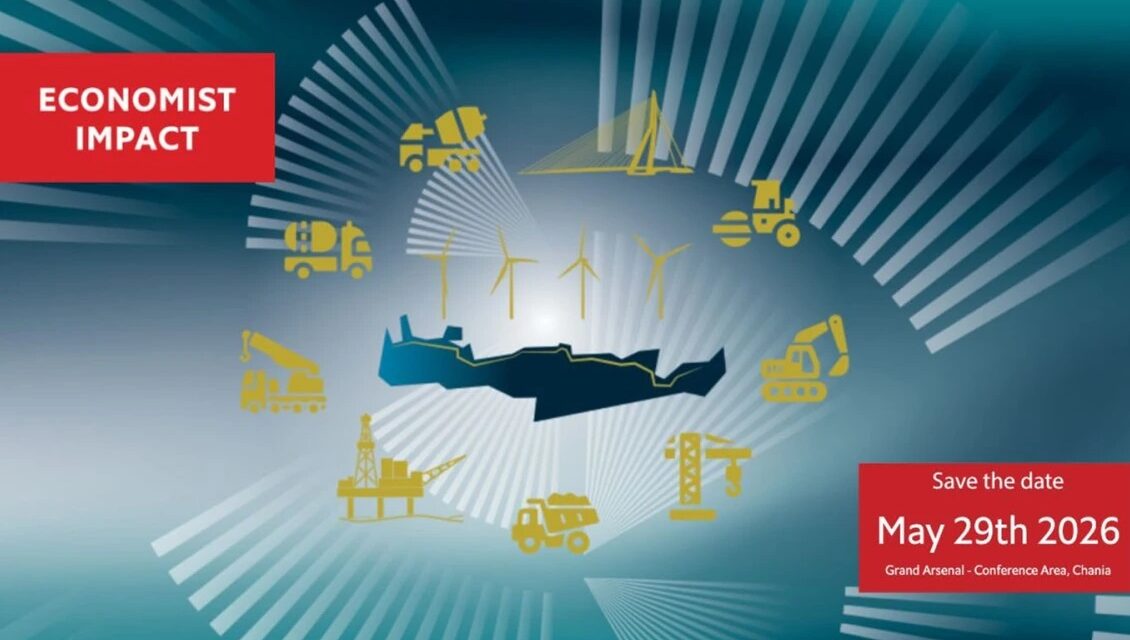
On May 29, the Grand Arsenal of Chania hosted an event that captures the new era opening for Greece’s largest island, Crete. The Economist and Powergame.gr organized the conference “Investing in Change: How Crete is Being Transformed,” with thematic pillars spanning from development and tourism to infrastructure, energy, telecommunications, road safety, circular economy, and culture.
Crete is currently at a pivotal development crossroads. Major infrastructure projects that are being implemented or planned — from road networks and water management works to energy interconnections — combined with strategic investments in tourism and hospitality, are shaping a new development model for the island and for the Greek periphery as a whole. Strengthening infrastructure resilience, ensuring the sustainable use of natural resources, upgrading the tourism product and attracting international investment constitute decisive factors for the long-term prosperity of Crete and of Greece. The main pillars to be addressed during the conference include:
- The strategic importance of major infrastructure projects for Crete’s economic growth
- Investments in tourism and the transition to a high-quality, sustainable hospitality model
- The role of energy and interconnections in shaping a new productive landscape
- The contribution of local production and the primary sector to the island’s extroversion
- The cooperation between Government, Local Authorities and the private sector in accelerating development.
(Source, agenda and key speakers: https://events.economistenterprise.com/ )
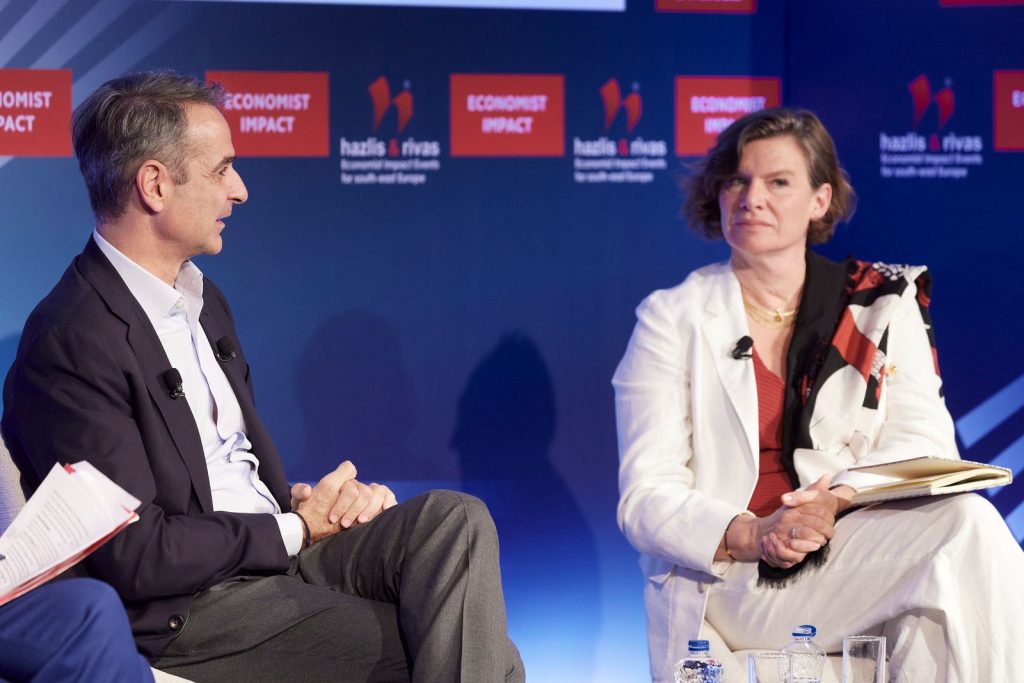
In the context of the conference, Prime Minister Kyriakos Mitsotakis participated as the keynote speaker in a conversation with Mariana Mazzucato, Professor in the Economics of Innovation and Public Value at University College London. The discussion was moderated by Alasdair Ross, Countries Editor for The Economist’s The World Ahead, and Joan Hoey, Greece analyst and Europe consultant for the Economist Intelligence Unit (EIU).
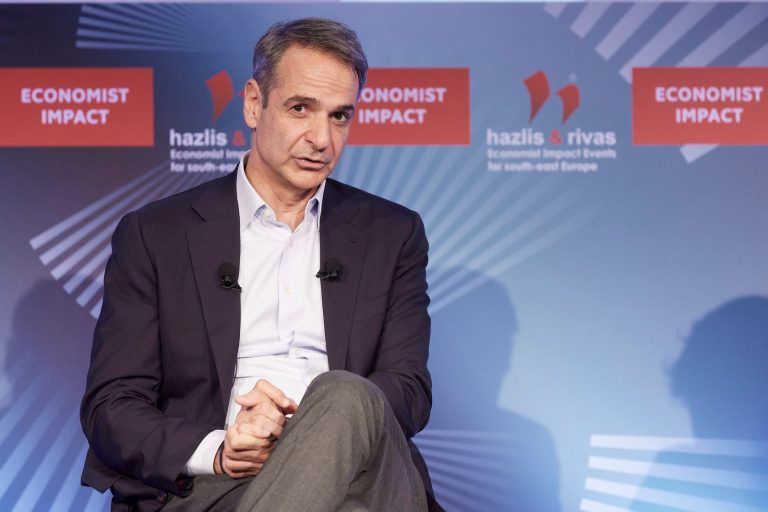
In his opening remarks, referring to Greece’s economic transformation and the investments being made in Crete, the Prime Minister noted, among others:
“We are in Crete, and this is an island which has benefited tremendously from significant public investment. And let me just highlight three projects of great importance. The first, which has already been completed, is the two electric interconnections between Crete and the mainland. These are important not only for reasons of energy security, but also because Crete used to burn diesel oil in order to produce electricity, and now it can benefit from an interconnected network and also leverage the significant renewable potential that the island has.”
“The second incredibly big public investment has been the new airport in Iraklion. When we’re looking at the potential of this island as the sort of the epicenter of the dynamic Greek tourism industry, we cannot envision an island growing to the 21st century with 20th century infrastructure. The old airport in Heraklion is struggling to meet the increased demands of people wanting to come to Crete. So building a brand new airport was a priority for us. It will be ready hopefully in 2028. 70% of the project has been completed.”
“And the third big infrastructure project was building a new highway that essentially runs across the northern part of the island. Again, a very significant public investment in infrastructure which is necessary to drive the island forward.”
“So for us, when we look at our agenda, public investments do play an important role alongside policies that foster entrepreneurship, bring in investment, and leverage the comparative advantages of our country. And of course, also all these projects, they’re being constructed by our big construction companies. So this is essentially a public-private partnership, given that these are concession models, which in our mind work very, very well. So this is no longer just about stabilizing the country, improving its image abroad. I think this work to a great extent has been done. Of course, we always need to be very vigilant. This is about the new phase of growth in which public investment plays a very, very important role, especially here in Crete.”
(Source: https://www.primeminister.gr/en/2026/05/29/38626 , Photos: https://www.ertnews.gr )
Prime Minister Kyriakos Mitsotakis in conversation with Mariana Mazzucato at the “Investing in Change: How Crete Is Being Transformed” conference in Chania
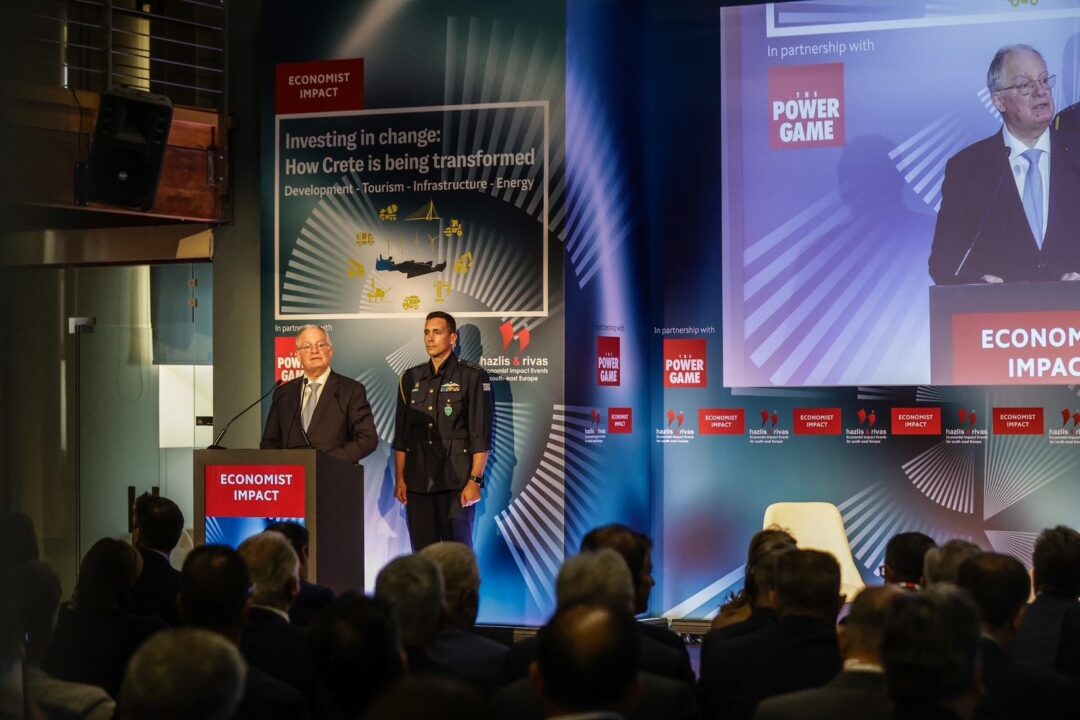
The President of the Hellenic Republic, Konstantinos A. Tasoulas, officially opened the proceedings of the conference noting, among others: “Twenty-eight centuries ago, the beauty and wealth of Crete were described in the Odyssey by Odysseus himself, speaking to Penelope in Book 19: ‘There is a land called Crete in the midst of the wine-dark sea, fair and fertile, surrounded by water, with countless people and ninety cities…’ It is this Crete that has brought us together today—to speak about its beauty and its potential for the sustainable development of its natural wealth, which it has preserved through the centuries.”
(Source: https://www.presidency.gr/)
Mr. Apostolos Tzitzikostas, European Commissioner for Sustainable Transport and Tourism, delivered a Keynote speech about the importance of European connectivity for sustainable development. Mr Tzitzikostas noted, among others, “Europe is investing in Crete. Through the Connecting Europe Facility (CEF), through its infrastructure and transport budget, through the European Investment Bank, through cohesion policy, and through investments in transport, energy, and tourism. It is investing through the Recovery and Resilience Facility, which, with €1.37 billion in funding, supports 93 businesses, 72 of which are small and medium-sized enterprises. Europe invests because it believes in this place. It invests because it recognizes its potential. It invests because Crete is not Europe’s periphery. Crete is the center of the Mediterranean. Europe, therefore, is not merely a source of funding. It is a partner; it is an ally. And connectivity is not a technical issue—it is a political one. It is a choice. It is a vision.”
“Crete possesses everything it needs to play a leading role and to become a strategic asset for Greece, which can and should develop into a central hub of the India–Middle East–Europe Economic Corridor (IMEC), indeed serving as one of its key terminal gateways. Just as Greece is evolving into a strategic hub for the whole of Eastern Europe through the Aegean–Black Sea rail and road corridor project that we have signed and are now launching—a project that has been my highest priority since I first assumed office. Crete has the geography, the culture, and the people. It now also has the infrastructure that is being built. The new era has already begun. Here. In Crete. In Chania.”
(Source: https://ec.europa.eu/commission/ )
Minister of Infrastructure and Transport Christos Dimas presented the plans and progress of the major infrastructure projects that are transforming Crete.
Minister of Environment and Energy Stavros Papastavrou focused on the dynamic relaunch of Greece’s hydrocarbons programme, the prospect of the first exploratory drilling operation in the Ionian Sea in half a century, and Crete’s emergence as a new energy hub for the country were at the center of remarks by. He outlined Greece’s strategy for the role of natural gas and hydrocarbons within Europe’s evolving energy landscape. According to the minister, the presence of two of the world’s largest private oil companies, Chevron and Exxon Mobil, in Greece’s offshore concession areas is neither a temporary development nor simply a reflection of the policy shift in the United States following the election of Donald Trump. Rather, he argued, it is the result of a long-term and systematic effort that began several years earlier, with Greece making sustained investments in energy infrastructure and the collection of critical geological data.
(Source: https://www.amna.gr/, https://www.economistas.gr/ )
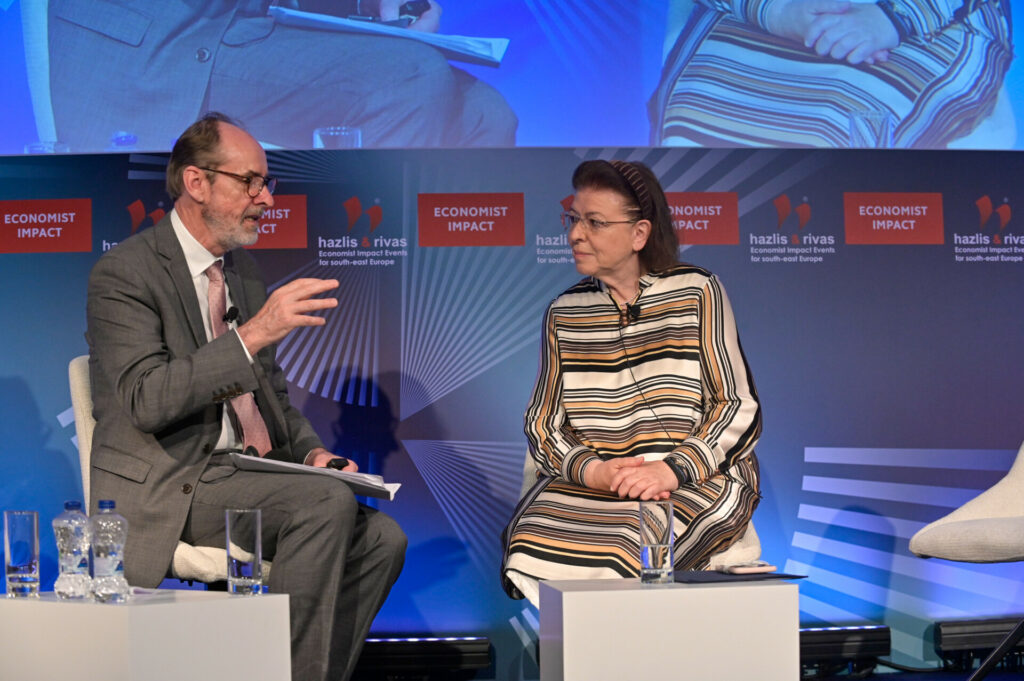
Minister of Culture Lina Mendoni noted, among others, “Culture is an important instrument of social cohesion. It brings society together in a variety of ways. At the same time, however, it is also a powerful driver of development.” The minister also referred to Greece’s approximately 28,000 archaeological sites and monuments—“an astonishing number,” as she described it—emphasizing that Crete is perhaps the place in the Mediterranean with the highest concentration of cultural assets, monuments, and archaeological sites. “Crete is also one of the most multilayered cultural landscapes, because it is not only home to an extraordinary wealth of archaeological sites and monuments spanning thousands of years, from antiquity to modern times. It is also defined by the immense strength of its traditions and intangible cultural heritage, expressed through its language, dances, songs, and gastronomy. Crete brings all of these elements together.” “At a time when major investments—such as the Northern Road Axis of Crete, the island’s energy interconnection projects, and the new airport at Kastelli—are creating critical infrastructure, what is needed, in my view, is a unifying element that ties all these developments together. That element is culture.” Lina Mendoni also referred to the celebration marking the inclusion of the Minoan Palaces on the UNESCO World Heritage List, an inscription that took place in July 2025.
(Source: https://www.amna.gr/home/)
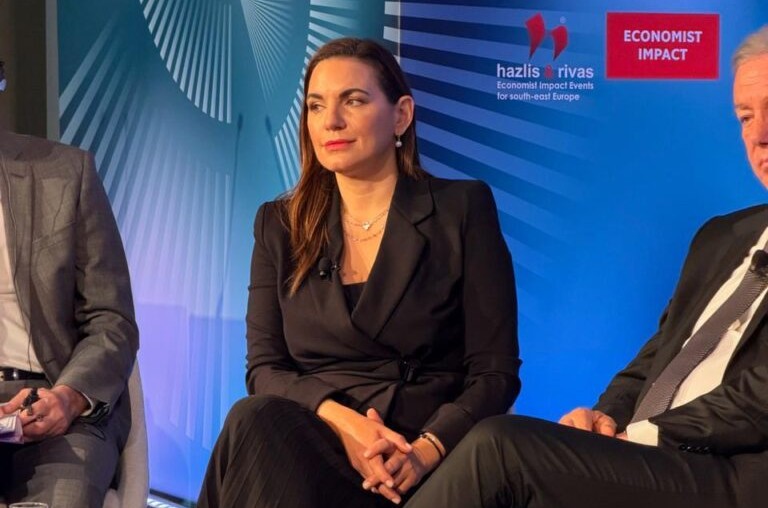
Tourism Minister Olga Kefalogianni noted “Crete is a place with a deep historical memory, a strong identity, and a decisive contribution to Greece’s development trajectory. At the same time, it embodies all the elements that make Greek tourism unique.” She also underlined that Crete offers a unique and multifaceted tourism product, combining natural beauty, cultural heritage, and a strong gastronomic identity, thereby reinforcing its position as a year-round, 12-month destination. Addressing the role of Greek tourism, the minister noted that it remains a key pillar of the economy, employment, and regional development, making an especially significant contribution to Crete. The minister further referred to the major infrastructure projects being implemented by the government of Prime Minister Kyriakos Mitsotakis, which are creating new development prospects for Crete and significantly strengthening the island’s connectivity and competitiveness, alongside substantial private-sector investments in tourism.
(Source: https://mintour.gov.gr/ )
Video of the Conference “Investing in change: How Crete is being transformed” (GR)
TAGS: CRETE | CULTURE | ENERGY | INFRASTRUCTURE | TOURISM