Energy security and resilience in the Eastern Mediterranean were at the core of the meetings held by the Greek delegation, led by the Minister of Environment and Energy, Stavros Papastavrou, during its visit to the United States. Cooperation among the countries of the Eastern Mediterranean—through the 3+1 platform (cover photo), the East Mediterranean Gas Forum, and the Atlantic Council Global Energy Forum—appears to be gaining momentum, taking on a more concrete form, and establishing clear rules for the region. This is the first time that energy diplomacy has moved beyond the narrow boundaries of economic transactions and begun to carry significant geopolitical implications. In this new energy landscape, Greece aspires to play a decisive role as an anchor of stability.
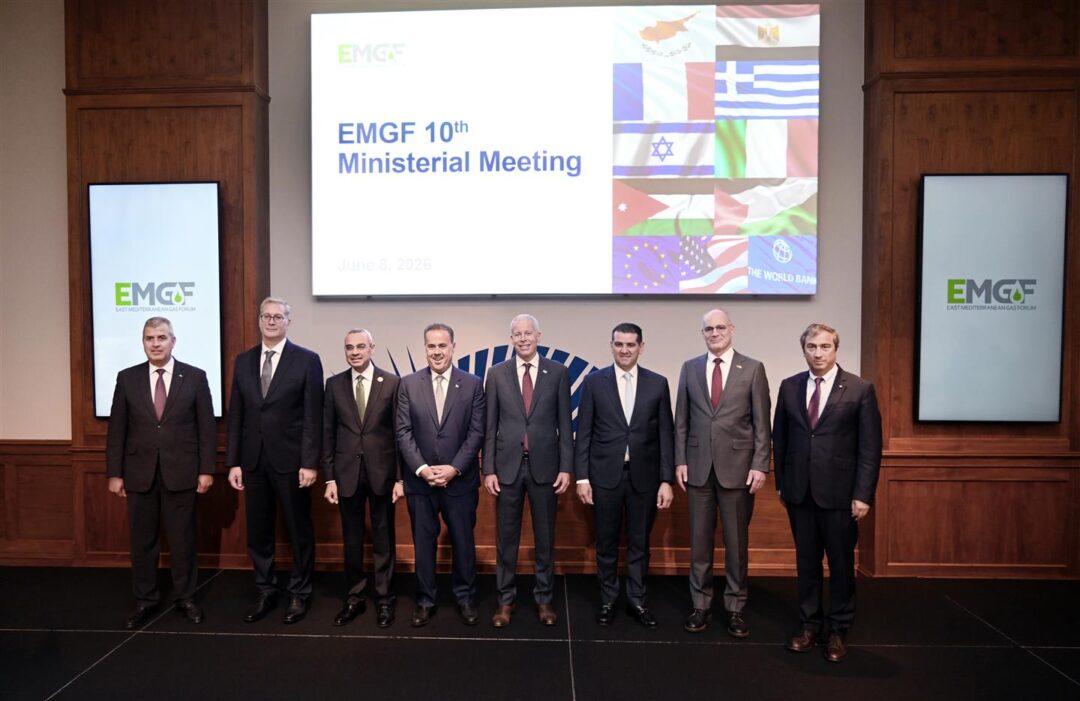
10th Ministerial Meeting of the East Mediterranean Gas Forum (EMGF)
The 10th Ministerial Meeting of the East Mediterranean Gas Forum (EMGF) was held on June 8 at the headquarters of the U.S. Chamber of Commerce in Washington, D.C., under the chairmanship of Greek Minister of Environment and Energy Stavros Papastavrou and hosted by the United States Department of Energy and Secretary of Energy Chris Wright. Participants included Michalis Damianos, Minister of Energy, Commerce and Industry of the Republic of Cyprus; Karim Badawy, Egypt’s Minister of Petroleum and Mineral Resources; Saleh Ali Al-Kharabsheh, Jordan’s Minister of Energy and Mineral Resources; heads of delegations from the governments of Israel, Italy, and Palestine; as well as representatives of the European Union and the World Bank.
The meeting took place nearly three years after the previous ministerial session, during which Greece assumed the Forum’s presidency. It is particularly significant because the EMGF remains only forum that brings together the governments of Jordan, Israel, and Palestine, alongside its permanent members – Cyprus, Egypt, Greece, Italy, and France – and its observers: the European Union, the United States of America, and the World Bank. The crisis in the Middle East had led to repeated postponements of meetings. Nevertheless, the importance of energy security in the region and the protection of energy infrastructure brought all member states back to the table.
According to the joint communiqué, the participants “discussed ways in which member states can leverage the EMGF to promote the development of interconnected and resilient energy systems in the Eastern Mediterranean, founded on natural gas, while also highlighting the region as a strategic energy corridor linking the Middle East, Europe, and Africa.” At the same time, the participants emphasized their renewed commitment to strengthening cooperation within the Forum, with full respect for the rights of member states over their natural resources in accordance with international law. They also pledged “to promote constructive cooperation aimed at enhancing energy security and the resilience of energy systems, while also highlighting the interdependence between natural gas and electricity networks at a critical juncture.”
As of August 1, Israel will assume the presidency of the EMGF following a unanimous decision supported by the votes of Jordan and Palestine. Sources at the Ministry of Environment and Energy stressed that energy cooperation transcends the region’s troubled past and present, while Mr. Papastavrou stated that “we are building a framework of cooperation with full respect for international law, based on mutually accepted principles and commercial rules that strengthens stability and discourages unilateral and revisionist behavior.”
Atlantic Council Global Energy Forum
The Eastern Mediterranean took center stage on Wednesday during a panel discussion on the future of European energy resilience, held as part of the Atlantic Council Global Energy Forum. Focusing on the shared priorities of Greece and Cyprus regarding interconnections and energy security, the Greek Minister of Environment and Energy, Stavros Papastavrou outlined the region’s emerging energy architecture, with Greece at its center, and highlighted the government’s efforts to achieve greater energy independence.
A key element of this energy architecture is the Vertical Gas Corridor, which strengthens energy security across Southeastern and Central Europe by creating a community of 100 million people and a network of interconnected infrastructure that supports both European and transatlantic energy resilience. The framework established by the East Mediterranean Gas Forum helps foster cooperation and stability in the Eastern Mediterranean. It provides a platform that advances the region by promoting collaboration rather than competition.
Great Sea Interconnector (GSI)
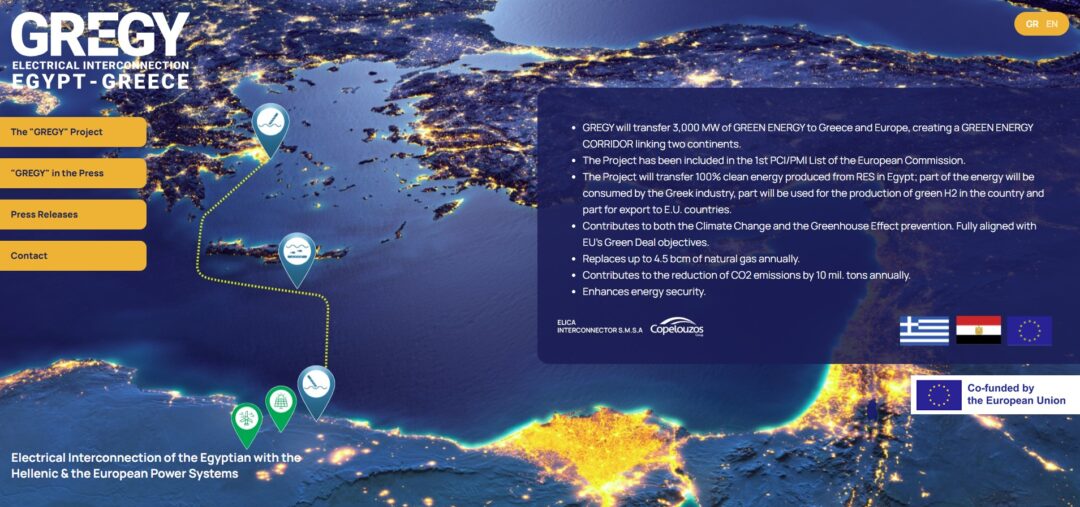
The Greece–Cyprus–Israel triangle, on the one hand, and its expansion into a quadrilateral with the participation of the United States—known as the “3+1” framework—has highlighted the strategic value of regional partnerships. Major projects such as the Great Sea Interconnector (GSI) and GREGY Interconnector are shaping an integrated energy ecosystem that extends beyond national borders.
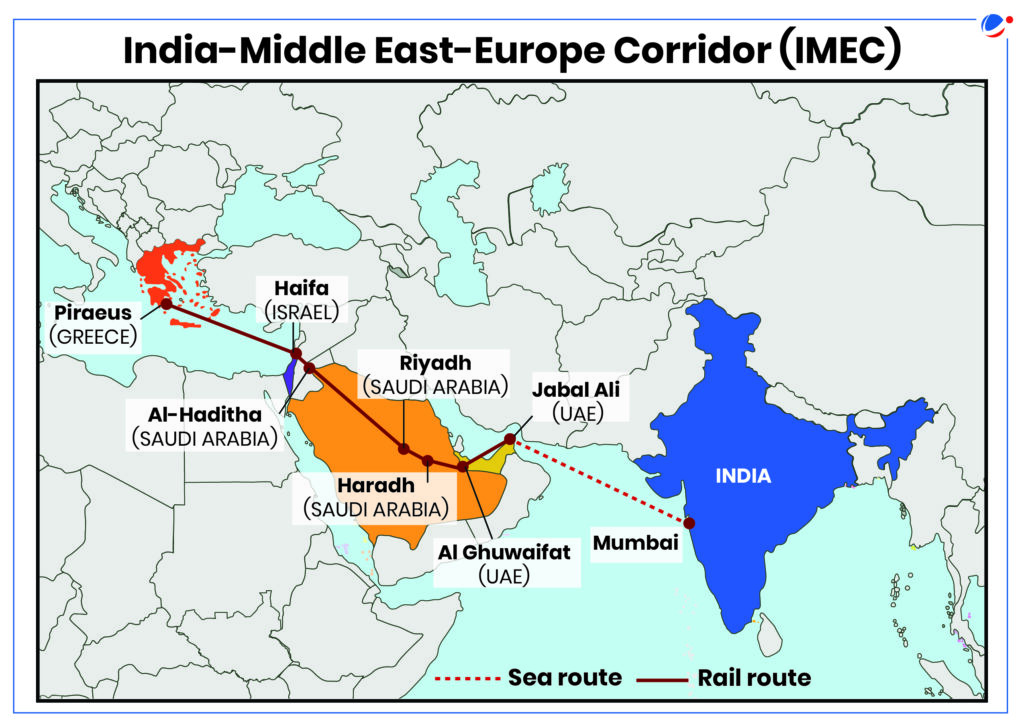
The India-Middle East-Europe Economic Corridor (IMEC)
At the same time, the major diagonal of the India-Middle East-Europe Economic Corridor (IMEC) is taking shape. This ambitious connectivity project aims to link India with Europe through the Middle East by leveraging ports, rail networks, highways, and digital infrastructure. “Thus, the Eastern Mediterranean—and our country in particular—is, in reality, at the center of this new geometry,” the Minister remarked. At the same time, emerging initiatives such as IMEC and Greece’s cooperation with the United States are creating a broader global framework, underscoring Greece’s role as a gateway connecting Europe with the Eastern Mediterranean, the Middle East, and even wider regions.
The “3+1” energy cooperation framework
The Greek delegation also traveled to Houston, where it participated in the 2nd ministerial meeting of the 3+1 energy cooperation framework, which brings together Greece, Cyprus, Israel, and the United States. Interconnection projects once again featured prominently in the discussions, alongside joint initiatives aimed at strengthening—and potentially expanding—regional cooperation. Particular emphasis was placed on cybersecurity and the protection of critical energy infrastructure. The participants also agreed to establish a dedicated task force to address these issues. Stavros Papastavrou stressed that “the weaponization of energy is not acceptable in the region,” while U.S. Secretary of Energy Chris Wright emphasized that “cooperation through trade prevails over conflict.” This is expected to form a new doctrine of cooperation and serve as the cornerstone of an emerging energy mosaic that excludes no one—except provocations and unilateral claims in the Eastern Mediterranean. In this context, the participants also agreed to hold their next meeting in Israel in December 2026.
A new geopolitical reality is now taking shape, with cooperation at its core as a necessary prerequisite. States that are unable or unwilling to adapt to these new conditions and the commercial rules that increasingly shape international relations risk choosing a path of isolation. All participants in the 3+1 framework endorsed this view as a fundamental principle, with the message of unity and shared objectives emerging as the dominant theme of the meeting.
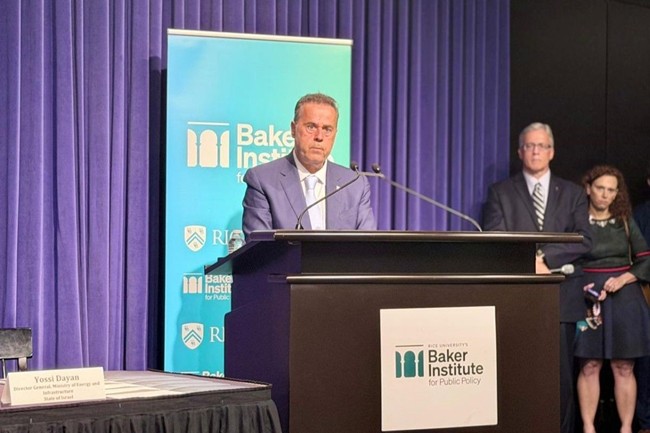
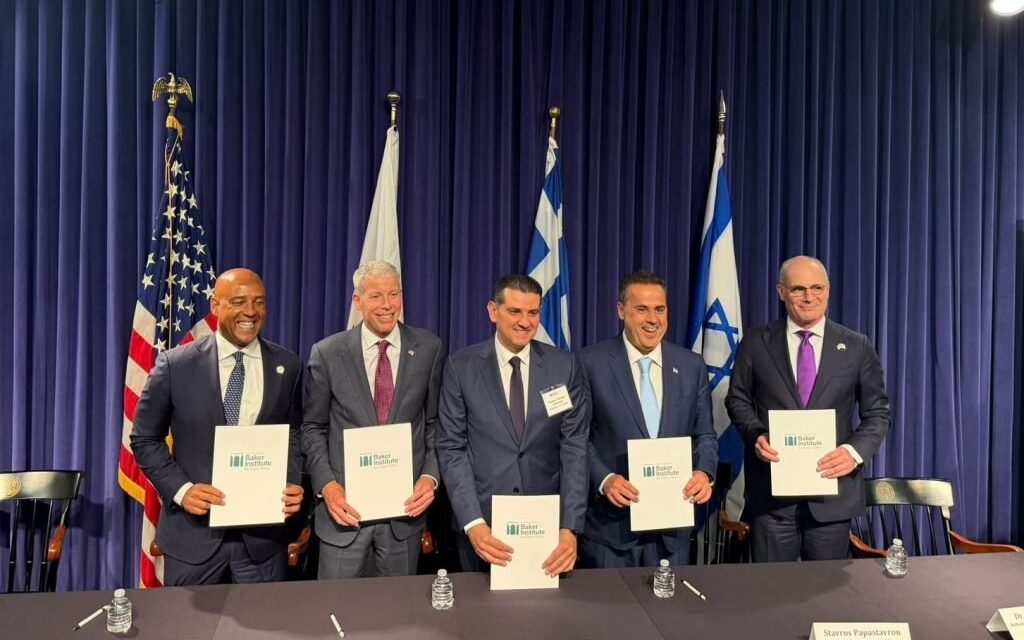
Environment and Energy Minister Stavros Papastavrou addresses the EMEC founding declaration signing ceremony at Rice University’s Baker Institute for Public Policy in Houston, Texas, describing the moment as historic. (Photo: Environment and Energy Ministry)
The East Mediterranean Energy Center (EMEC)
With the prevention of any weaponization of energy as its guiding principle, the signing of the declaration establishing the Eastern Mediterranean Energy Center (EMEC) followed at Rice University. The declaration was signed by U.S. Secretary of Energy Chris Wright, Greek Minister of Environment and Energy Stavros Papastavrou, Cyprus’s Minister of Energy, Commerce and Industry Michalis Damianos, and Israel’s Ambassador to the United States, Yechiel Leiter. Senior executives from major U.S. energy companies participated in the ceremony following the signing of the declaration, including representatives of Chevron, ExxonMobil, and Cheniere Energy.
Greek Minister, Stavros Papastavrou, in cooperation with U.S. Secretary of Energy, Chris Wright, brought the discussion on establishing the Center back to the forefront. The shared commitment to advancing energy security in the Eastern Mediterranean, expressed during the P-TEC meeting held in Athens in November 2025, was followed by the Greek minister’s visits and consultations in the United States in both March and June 2026. The latter visit culminated in the signing of the declaration that formally launches the establishment of the Eastern Mediterranean Energy Center (EMEC).
The aim of the Center is to serve as a platform for strengthening regional energy security, expanding infrastructure development, and promoting commercial opportunities. With the support of Congress, the Center will enhance the economic and energy resilience of regional partners by facilitating investment, improving market integration, and supporting the development of advanced energy systems and infrastructure. Its activities will focus on increasing cross-border energy trade, improving system reliability, and positioning U.S. companies to compete in high-value regional projects. Within this framework, the Center will seek to foster cooperation among the governments participating in the 3+1 framework, as well as technical and financial institutions, academia, and the private sector. It is now increasingly clear that the Eastern Mediterranean is set to assume a new role as a key pillar of stability and prosperity, while also strengthening the transatlantic relationship between Europe and the United States.
(Sources: https://www.amna.gr/, https://ypen.gov.gr/ )
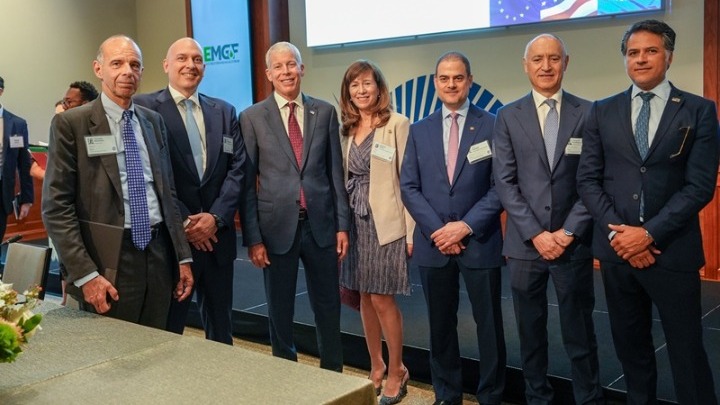
Hellenic-American Chamber of Commerce Holds Meetings in the United States on Energy Policy in the Eastern Mediterranean
A series of meetings and discussions on energy policy in the Eastern Mediterranean was organized in Washington, D.C., by the Hellenic-American Chamber of Commerce (AmCham Greece) on the occasion of the 3+1 Energy Ministerial Meeting held in the United States. According to a statement by AmCham Greece, the discussions highlighted the growing role of Greece and Cyprus as regional energy hubs, as well as the potential for connecting Eastern Mediterranean energy resources with European markets.
In cooperation with the Atlantic Council, AmCham Greece organized the first Eastern Mediterranean Energy Business Forum, with the participation of AmCham Cyprus. The initiative took place within the framework of the Atlantic Council’s Global Energy Forum and aimed to bring the perspective of the Greek business community into the discussions on the energy policy agenda of the 3+1 framework. The forum brought together government officials, business executives, and energy policy experts.
(Source: https://www.amna.gr/ )
Read also:
“Energy Is Power of Security, Growth and Influence” says Minister Stavros Papastavrou
TAGS: ENERGY