
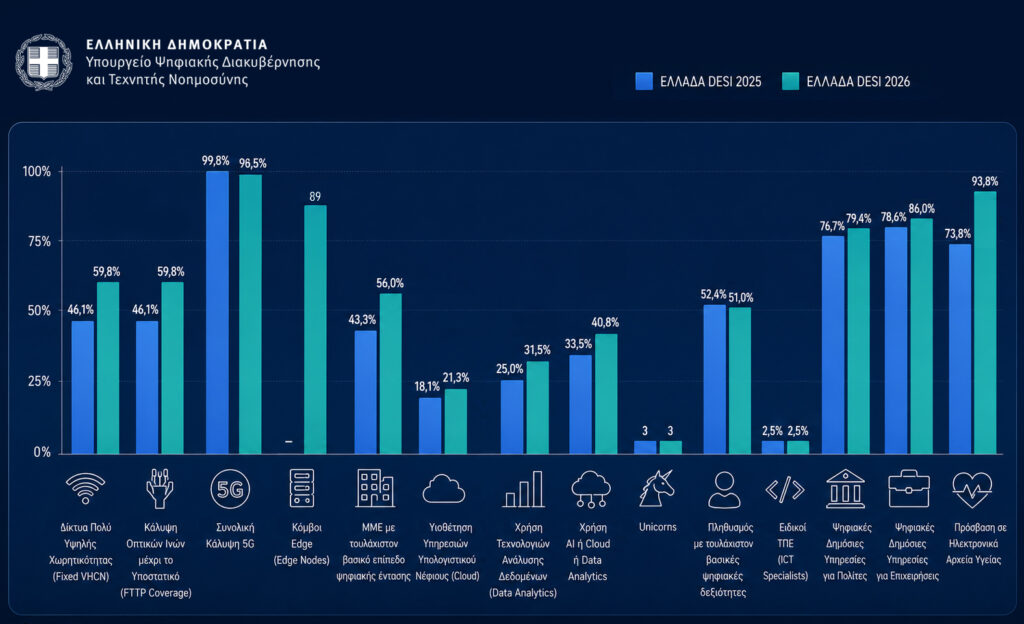
Greece continues to make significant progress in its digital transformation, as reflected in two leading international assessments by the Organisation for Economic Co-operation and Development (OECD) and the European Commission. The latest reports confirm improvements in public digital services, the expansion of telecommunications infrastructure, the adoption of cutting-edge technologies, and the country’s steady progress toward achieving the objectives of the Digital Decade 2030.
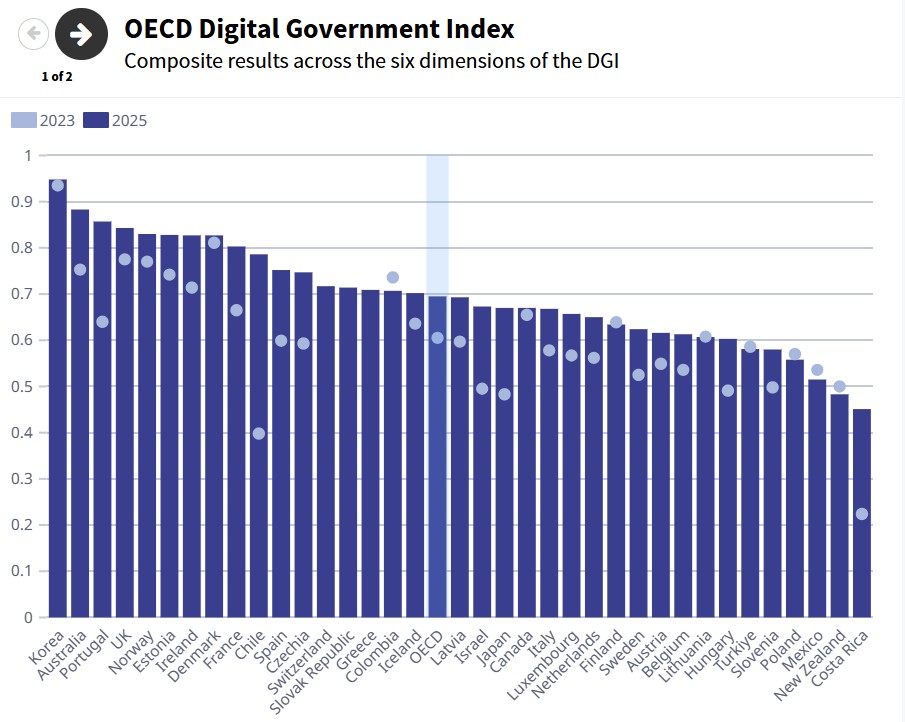
OECD (2026), Digital Government Outlook. According to the OECD’s Digital Government Outlook 2026 report, Greece ranks among the countries demonstrating strong performance in the digital transformation of public administration, achieving an overall score of 0.71, compared with the OECD average of 0.70. Greece’s performance surpasses that of several advanced economies.
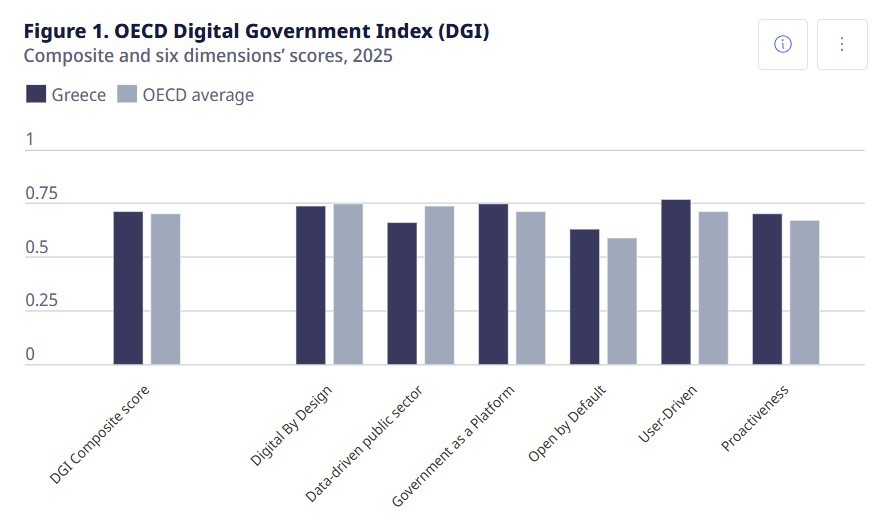
Greece also outperforms the OECD average across four key indicators:
User-Driven: 0.77 vs. 0.71
Government as a Platform: 0.75 vs. 0.71
Proactiveness: 0.70 vs. 0.67
Open by Default: 0.63 vs. 0.59
The report highlights several flagship initiatives, including the Interoperability Center of the Ministry of Digital Governance, gov.gr with more than 2,250 digital services, the use of Artificial Intelligence in the Hellenic Cadastre, the digital assistant mAigov, and the new national open data portal data.gov.gr. These initiatives underscore Greece’s commitment to modernizing public administration, improving service delivery, and fostering greater transparency and accessibility through digital technologies.
European Commission’s Digital Decade 2026 Report
According to the European Commission’s Digital Decade 2026 Report, Greece continues to consistently implement its national strategy for the digital transformation of public administration and is steadily converging with the broader European Union digital agenda. The country addressed 83% of the European Commission’s recommendations, maintaining its steady progress toward achieving the Digital Decade targets throughout 2025. Public digital services for citizens reached 79.4% in 2025, while digital services for businesses rose to 86%, exceeding national projections of 76.2% and 84.4%, respectively.
Particularly strong performance is evident in digital infrastructure. 5G network coverage now reaches 99.5% of the population, effectively approaching the national target of 100% by 2030 and significantly surpassing the 2025 projected milestone of 90%. Similarly, coverage in rural and island areas has reached 99%, making a substantial contribution to reducing geographical disparities in digital connectivity. At the same time, Fiber-to-the-Premises (FTTP) and Very High Capacity Networks (VHCN) are expanding at an annual growth rate of 29.7%, more than five times the European average. From virtually zero coverage in 2019, Greece has increased FTTP and VHCN coverage to 59.8%, exceeding the projected 2025 benchmark of 51% and reaffirming its steady trajectory toward universal coverage by 2030.
The European Commission’s report also highlights Greece’s strengthened geostrategic role as a digital hub for Southeastern Europe, driven by investments in submarine cable systems, international telecommunications infrastructure, and data centers. At the same time, the implementation of the country’s national data governance policy and the new National Cybersecurity Strategy are enhancing the resilience, reliability, and security of Greece’s digital infrastructure. The report further underscores Greece’s growing presence in advanced technologies. Key initiatives include the establishment of the “Pharos” AI Factory, one of the first seven AI Factories in the European Union, Greece’s participation in European initiatives for quantum infrastructure, and the creation of the Hellenic Microchip Competence Centre, aimed at strengthening expertise and innovation in semiconductor technologies.

The Hellenic Microchip Competence Centre
(Source: 2026 digital decade eHealth indicator study. Annex : country factsheets )
Digital health
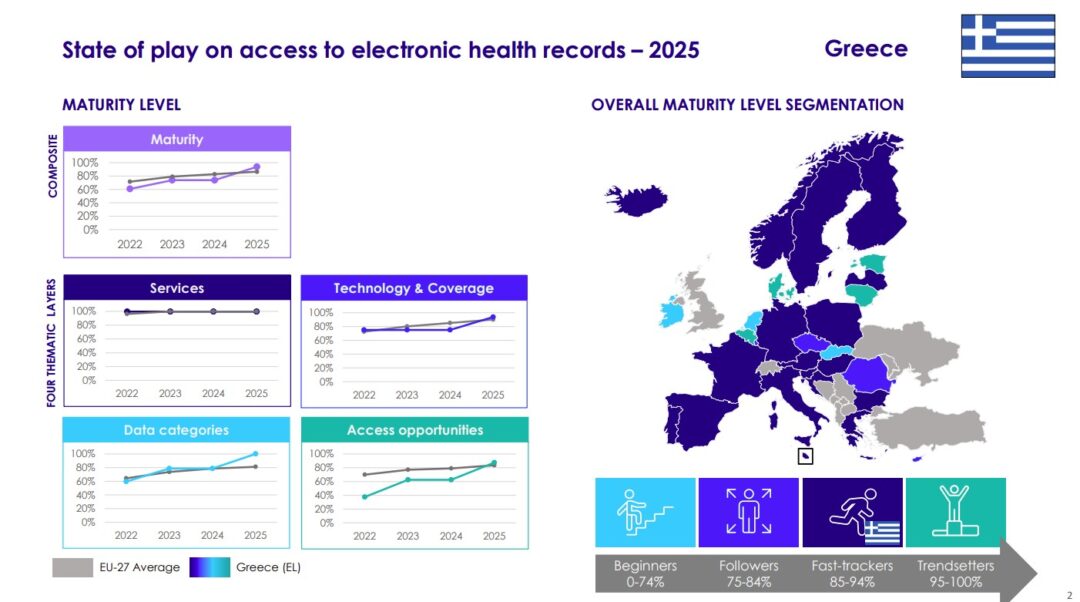
The country’s progress is also evident in the field of digital health. According to the eHealth Indicator Study 2026 by Capgemini Invent, Greece recorded one of the largest annual improvements in Europe, with its composite digital health index increasing by 20 percentage points in a single year to reach 94%, compared with an EU average of 87%. With this performance, Greece ranks among the leading EU member states in digital health.
The progress reflected in international assessments is accompanied by areas where Greece is expected to accelerate its efforts further. The Digital Decade 2026 Report identifies the strengthening of digital skills as a key challenge for the coming years. Currently, 51% of citizens aged 16–74 possess at least basic digital skills, compared with 60.4% across the European Union. The report also highlights the need to further expand the pool of professionals in information and communication technologies (ICT) and to accelerate the digital transformation of businesses. At the same time, the report acknowledges that Greece is advancing at a faster pace than the European average in several critical areas, including fiber-optic deployment, public digital services, electronic identification (eID), access to electronic health records, and the adoption of advanced digital technologies. These achievements confirm that Greece is steadily converging with the European Union’s digital standards and objectives.
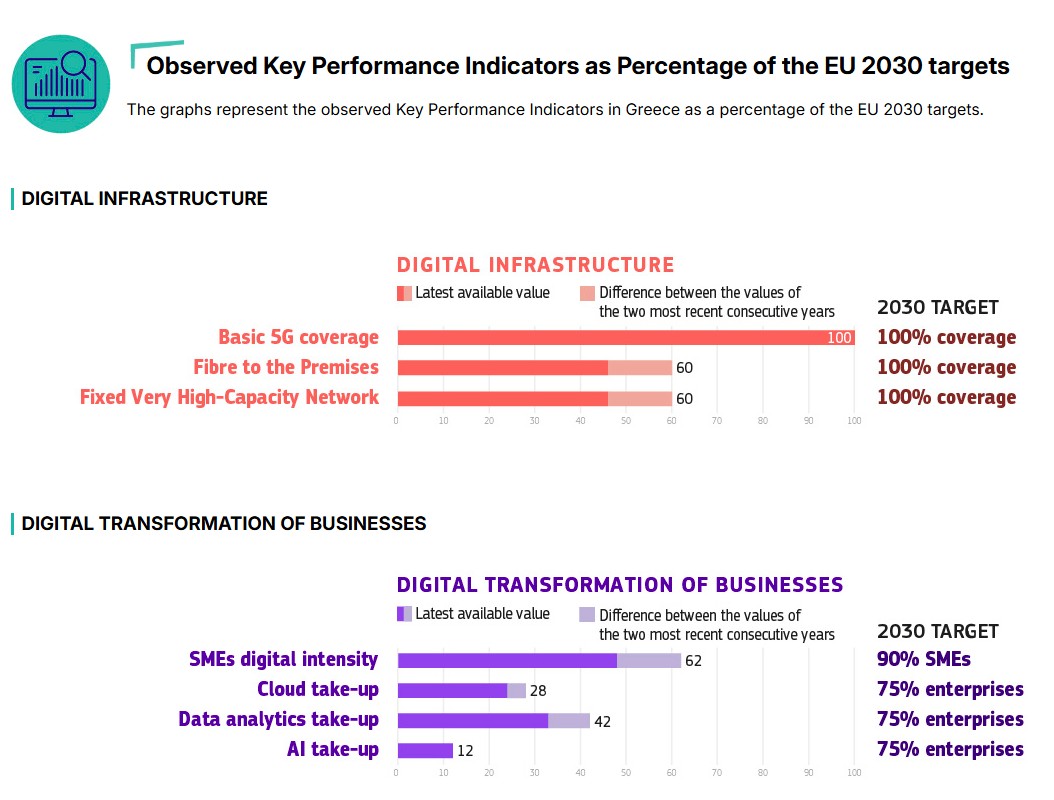
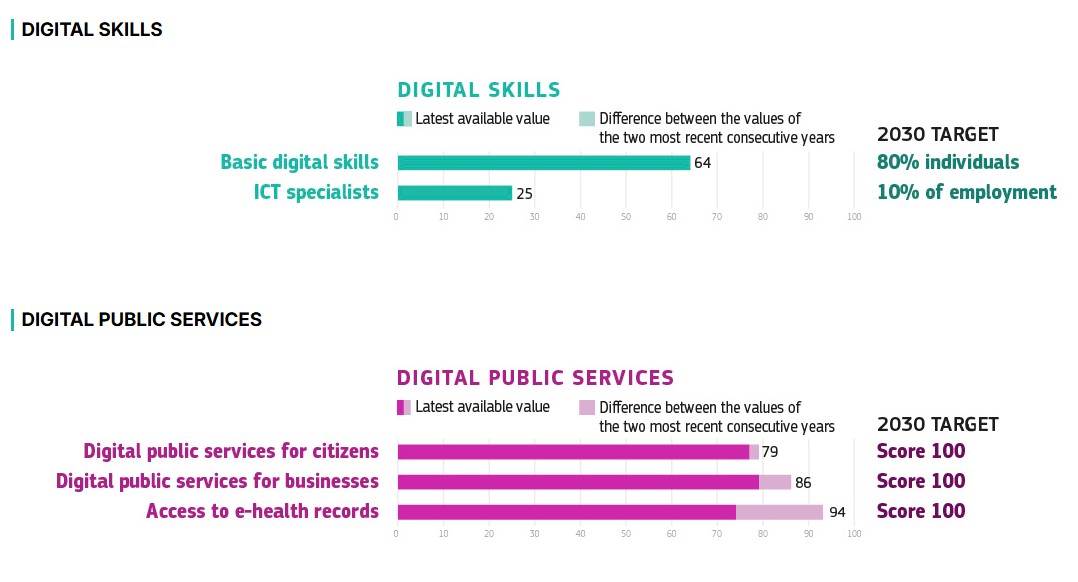
Observed Key Performance Indicators as Percentage of the EU 2030 targets. The graphs represent the observed Key Performance Indicators in Greece as a percentage of the EU 2030 targets. (Source: https://digital-strategy.ec.europa.eu/en/factpages/greeces-2026-digital-decade-country-report )
(Source:https://www.amna.gr/mobile/article/1002163/Diethnis-anagnorisi-gia-ton-psifiako-metaschimatismo-tis-Elladas-, https://www.mindigital.gr/ )
Read also:
Memorandum of Understanding Between Greece and AI Company ElevenLabs for Digital Government
DAEDALUS Supercomputer Enters Final Implementation Phase
TAGS: DIGITAL TRANFORMATION | INNOVATION