
Team Hellas delivered a landmark performance at the Taranto 2026 Mediterranean Games, winning 71 medals and securing a historic third place in the final medal standings, one of Greece’s most impressive performances in the history of the Games.
The Greek delegation celebrated an outstanding haul of 26 gold, 26 silver and 19 bronze medals. This achievement carries even greater significance as it marks the first time in the 75-year history of the Mediterranean Games that Greece has finished third in the overall medal standings, underlining the strength, depth and exceptional standard of Greek sport.
Greek athletes were the driving force behind this outstanding performance, supported by the invaluable dedication and expertise of their coaches. Together, they delivered outstanding sporting achievements and countless moments of pride for Greece throughout a memorable edition of the Games.
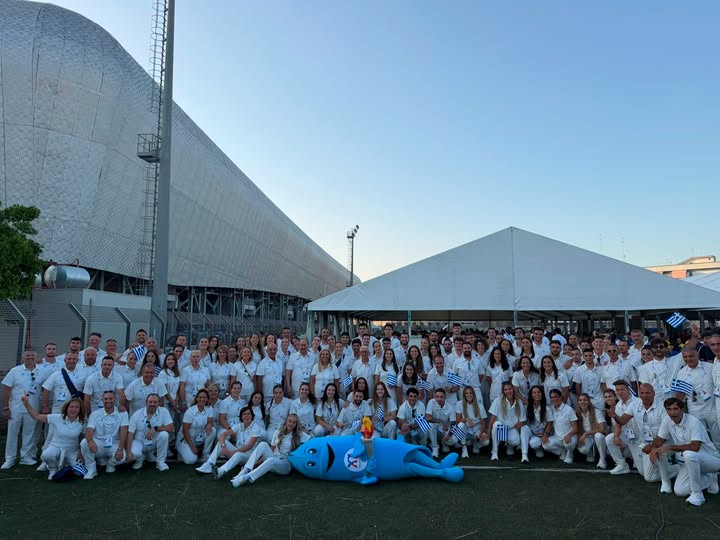
source: HOC, https://www.facebook.com/HellenicOlympicCommittee/posts/pfbid02psJD9RJcjCnXartRgJ4W3it6c7yYE71qJVWBFcdj6NC11N3kzJ7AXc7vbAnHxRHNl
The 20th Mediterranean Games brought together athletes from across the Mediterranean in Taranto and the wider Apulia region of Italy from 21 August to 3 September 2026. More than a major sporting event, the Games served as a meeting point for nations connected by the Mediterranean and its rich diversity of history, cultures and traditions.
Around 3,800 athletes representing 26 National Olympic Committees took part in the Games, competing across a wide-ranging program of sports hosted in Taranto and other cities throughout Apulia. Two disciplines, roller skating and padel, made their debut as medal sports at the Mediterranean Games, reflecting the continued evolution of the Games, alongside the changing sporting landscape of the Mediterranean. Greece is a founding member of the International Committee of the Mediterranean Games and has participated in every edition of the Games since their establishment in 1951.
Team Hellas: Strength and Diversity in Action
Greece was represented by 277 athletes competing in 29 sports. The Greek delegation includes leading athletes, Olympic medalists, as well as younger athletes representing the next generation of Greek sport.
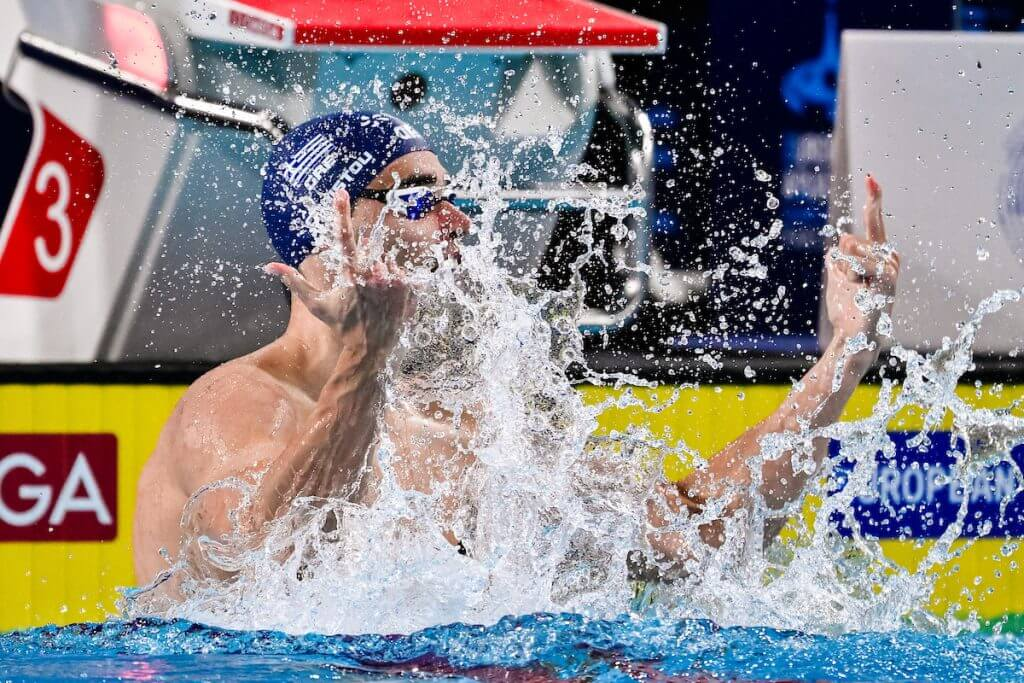
Olympic medalist Apostolos Christou won the men’s 100m backstroke in a Games record of 52.34, while Evangelos Makrygiannis took bronze in the same event. Wrestling was likewise among Greece’s strongest disciplines. Georgios Kougioumtzidis and Dauren Kurugliev won gold medals, while in judo, Olympic medallist Elisavet Teltsidou added another gold medal to her career by winning the women’s +78kg category on 29 August.
A particularly notable moment came in fencing. Katerina Kontochristopoulou won the women’s foil title. Her victory was one of the historic milestones of the Greek campaign in Taranto and gave Greek fencing its first gold medal at the Mediterranean Games.
The Games also highlighted the progress of disciplines that receive less international attention. Greek athletes enjoyed an outstanding run in fin swimming, with Ifigeneia Teliousti winning two individual gold medals and contributing to a gold-winning mixed relay. Tennis also brought a historic success, with Martha Matoula and Eleni Korokozidi winning gold in the women’s doubles.
https://www.facebook.com/photo/?fbid=1522579869906559&set=pcb.1522580429906503
From Ancient Taras to Team Hellas
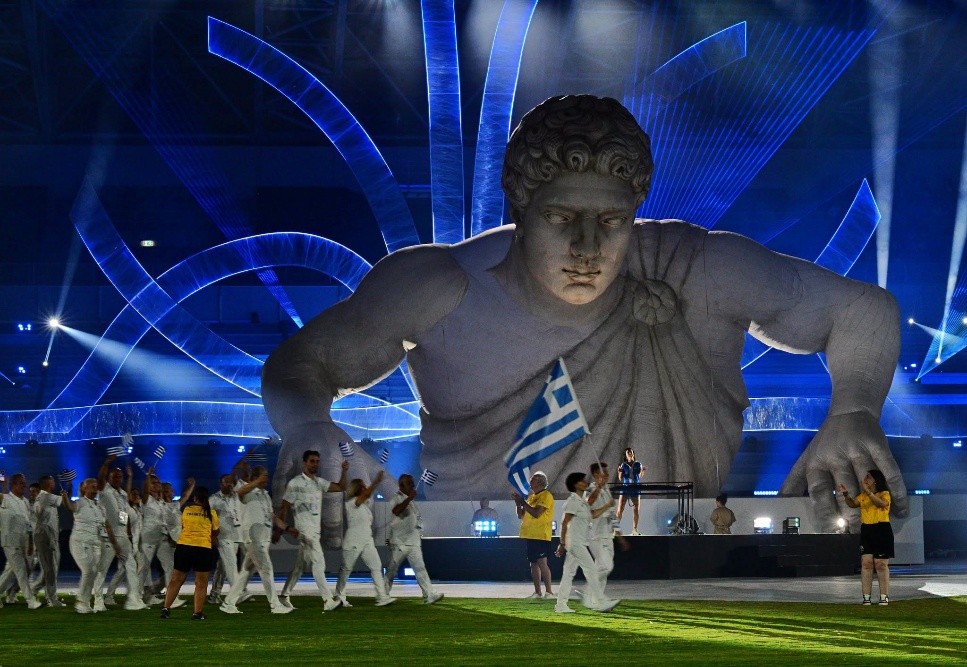
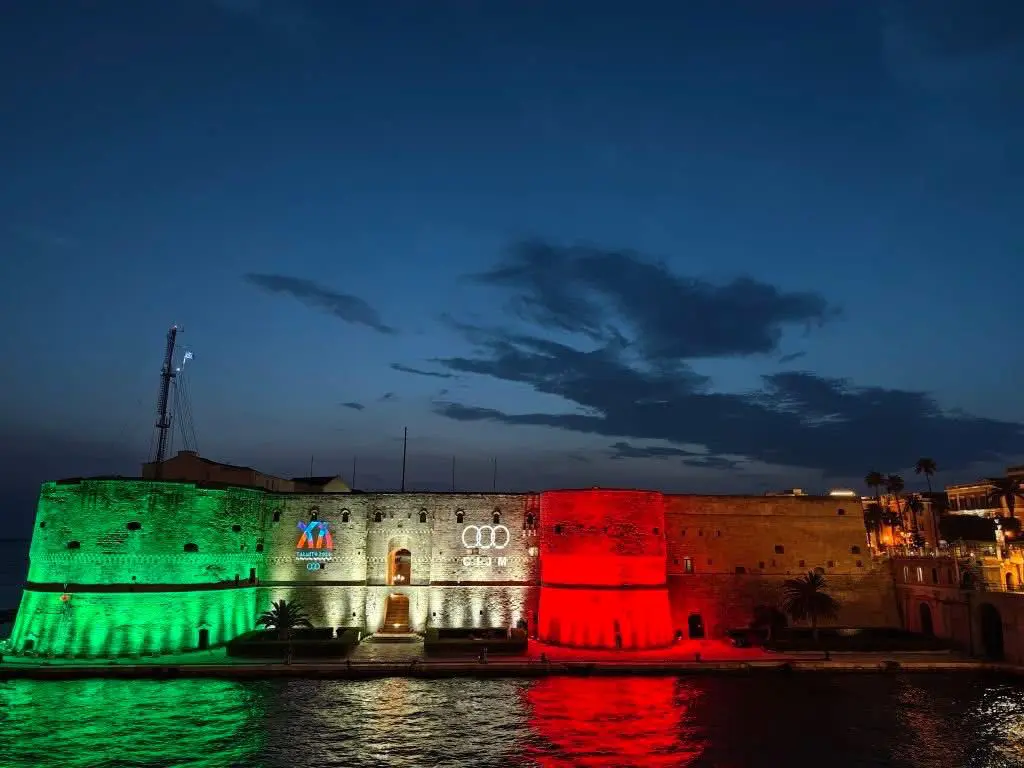
The sporting achievements of Team Hellas acquired an additional symbolic dimension from the setting itself. Modern Taranto stands on the site of ancient Taras, one of the most important Greek cities of Magna Graecia. Founded by Spartan settlers in antiquity, the city became a major centre of the Greek presence in southern Italy and developed strong political, economic and cultural links throughout the Mediterranean. This heritage was brought vividly into the present during the Opening Ceremony, with references to ancient Greece and the figure of Poseidon forming part of the ceremony.
Sport as a bridge-The role of sports diplomacy
The Mediterranean Games are inspired by the values of friendship, respect, excellence, unity, peace and sustainability. Games mission is to unite the peoples of the Mediterranean through sport, promoting peace and friendship.
Greece, as the birthplace of the Olympic Games, the Olympic Ideal, and classical athletics, has a long tradition of both organizing and participating in major international sporting events. In this context, the promotion of major sporting events held in Greece and internationally, such as the Olympic and Paralympic Games, the Special Olympics, the Authentic Athens Marathon, and the Mediterranean Games, as well as the ongoing promotion of the Olympic Truce, are key aspects of Greek Public Diplomacy. Greek sports diplomacy showcases sports not only as a field of international cooperation, but also as a powerful tool for peace, dialogue, and cultural promotion.
The Rise of Greece’s Next Generation
With a total of 71 medals, Greece secured third place in the overall Mediterranean Games standings for the first time in its history, among 26 countries, writing a golden chapter in Greek sport.
Particularly significant is the fact that the Mediterranean Games also showcased a new generation of talented Greek athletes, aged 17 to 19, who aspire to play leading roles in major international competitions in the years to come. In sports such as fencing, badminton, and others, Greek athletes won medals at the Mediterranean Games for the first time in their history, gaining greater recognition and exposure among the Greek public.