The web portal Study in Greece is campaigning for the promotion and international visibility of Greek Universities and the comparative educational advantages of our country. In particular, the campaign focuses on the foreign language study programs that Greek Universities offer to Greek and international students. The initiative is supported by the General Secretariat of Higher Education of the Ministry of Education and Religious Affairs and the General Secretariat for Greeks Abroad and Public Diplomacy of the Ministry for Foreign Affairs. In this context, a number of educational programs and actions are presented in detail on a regular basis, such as undergraduate and postgraduate programs, summer schools etc, to inform international students about the many foreign language options offered by Greek Universities.
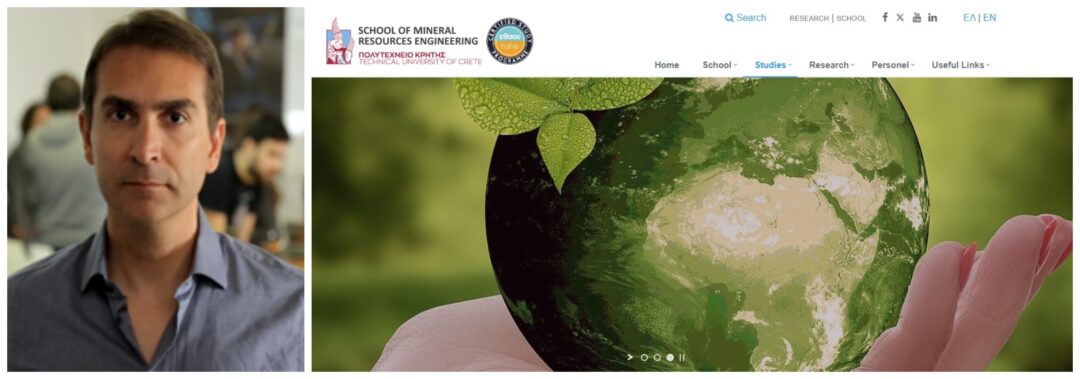
Panagiotis Partsinevelos is a Professor of Space Informatics and Unmanned Systems and Director of the Laboratory of Geodesy and Informatics of Geosciences at the School of Mineral Resources Engineering of the Technical University of Crete. He is also the Director of the MSc in Sustainable Technologies of Energy Resources and Raw Materials.
Study in Greece interviewed Professor Panagiotis Partsinevelos on the MSc in Sustainable Technologies of Energy Resources and Raw Materials, its features and what it has to offer to international students.
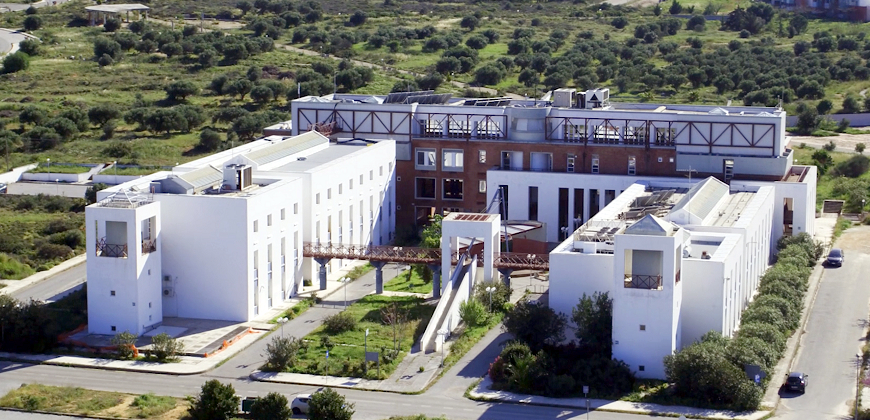
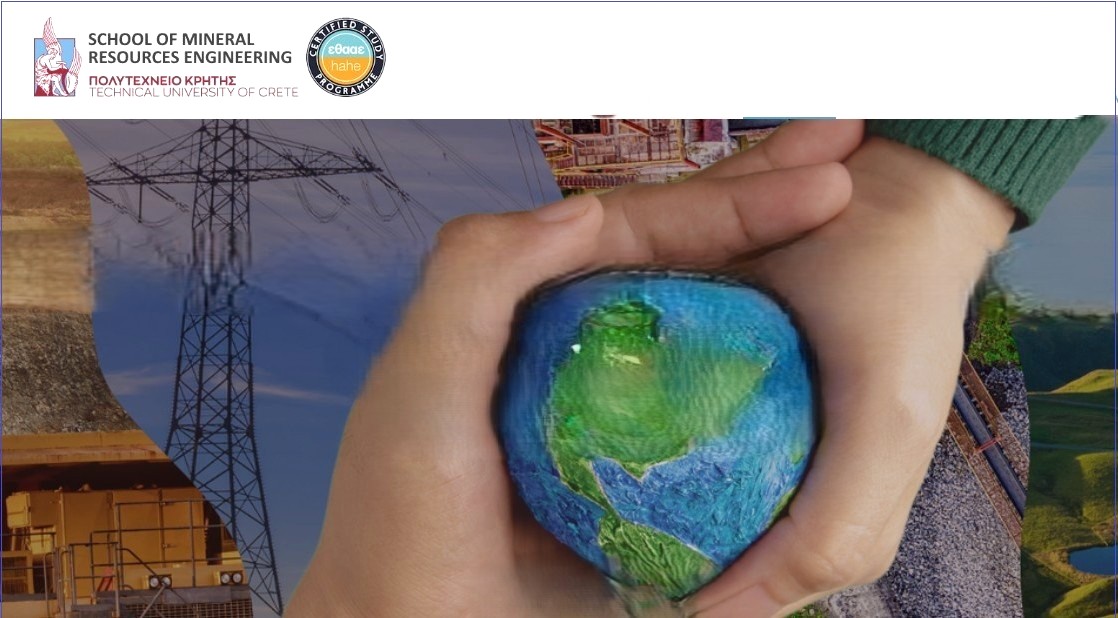
School of Mineral Resources Engineering of the Technical University of Crete at Chania
Please give us a brief overview of the MSc in Sustainable Technologies of Energy Resources and Raw Materials, its structure and main research areas.
The Sustainable Technologies of Energy Resources and Raw Materials MSc is a 3-semester 90 ECTS program delivered under a hybrid mode in English by the School of Mineral Resources Engineering of the Technical University of Crete. It is structured around two core pillars: Energy Resources, focusing on reservoir engineering, Carbon Capture & Storage (CCS), and biofuels and Raw Materials, focusing on low-grade ore and near-zero-waste processing, critical raw materials recovery and recycling. These scientific areas are supported by high-end research laboratories equipped with advanced technological infrastructure, from geostatistical modeling and seismic processing to geoinformatics, automation and robotics. In addition, the implementation of many national and EU-funded projects in our School enables students to get acquainted with top quality research that advances beyond the current state of the art (SoA) and generates scientific breakthrough. The contribution of this Master’s program lies in providing high-level expertise in the extraction, processing, recycling, and environmental management of mineral raw materials and energy resources, a matter of strategic importance at both the national and global levels.
Could you tell us a few things about the program’s alignment with the Technical University of Crete’s broader picture and goals for internationalization?
The program extends well beyond the University’s strategy since the energy and mineral resources fields define the backbone of modern economies and the primary reason for geopolitical balance. The program provides the knowledge of sustainable extraction methods for strategic autonomy in the supply chains of rare earth elements and energy resources while enabling students to decouple the link between economic growth and environmental degradation through circular economy principles.
Thus, internationalization is a defining necessity and prerequisite of our program, scaled from local to global challenges.
In addition, through its core participation in the EURECA-PRO European University alliance, one of the strategic University alliances across Europe, the MSc program facilitates the cross-border mobility of engineering talent required to implement UN Sustainable Development Goal 12 (Responsible Consumption and Production). The MSc addresses a multicultural academic environment. It directly connects TUC’s engineering expertise with the European industrial network, facilitating mobility and collaborative research across borders.
“Sustainability” seems to be a term used so frequently that it may lose its meaning. How does sustainability take form in your MSc?
In this program, sustainability is defined by technical efficiency and hands-on results. It is embedded in the Low Environmental Footprint modules and Sustainable Mineral Processing objectives. Rather than theoretical discussion, sustainability in our program is translated to engineering systems that minimize waste, maximize the recovery of secondary raw materials from industrial by-products, and ensure the geomechanical safety of energy infrastructure. On the principle of technical verticality, sustainable solutions cannot be dissociated from a full understanding of the physical processes of production and extraction, requiring deep knowledge of thermodynamics, geomechanics, and chemical processing. Meaningful decarbonization and resource efficiency are not achieved through administrative management alone, but through the fundamental redesign and reengineering of industrial workflows, essential to the global industrial transition. In addition to the term “sustainability” we also introduce and justify another term in our MSc program, “responsible” mining and processing of raw materials mainly for the production of critical and strategic elements.
Please give us a few examples of the professional prospects for graduates of the program.
Graduates enter the global market as specialized engineers capable of leading and managing the routes of the energy transition and raw materials challenges. Career paths include resource engineers for the critical minerals supply chain, subsurface engineers for carbon sequestration and geothermal projects, environmental engineers in the recycling industries and consultants for international energy firms navigating the transition to net-zero, Social License to Operate (SLO) and ESG Governance. Also, the future of the sector focuses on digital mining, automation, robotic systems, digital twins, AI, In-Situ Resource Utilization (ISRU)and data analytics, to drive sustainability, circular economy practices, and environmental risk mitigation in industrial extraction sectors.
Could you share a few insights on the international outlook of the program? What impact will your graduates expect to create in sustainable development on a global level?
The program specifically addresses the technical demands of the European Green Deal and the Critical Raw Materials Act (CRMA). The program aligns with the global shift to a sustainable energy economy, projecting a substantial increase in mineral demand by 2050, especially for battery metals, to meet net-zero targets. By mastering the extraction and processing of the materials required for renewable technologies, our graduates play a decisive role in securing global supply chains. Their impact will be reflected in the implementation of “Near-Zero-Waste” protocols and the development of cleaner energy resources that reduce global reliance on carbon-intensive fuels.
What is the one defining quality of your MSc that you believe makes it especially attractive to international students?
The defining quality of the MSc in Sustainable Technologies of Energy Resources is that it offers a direct path into the strategic autonomy sectors of the global economy, where the demand for expertise currently far exceeds the available supply. While many international programs address “sustainability” from a policy or environmental management perspective, this MSc focuses on the physicality of the transition, teaching the technologies required to secure the supply of critical raw materials (Lithium, Nickel. Cobalt, Copper, Rare Earth Elements) which are currently the primary bottleneck in the global economy.
By bridging the fields of raw material and energy resources, the program equips international students with the ability to understand and solve the energy-materials balance. This provides a direct path to becoming a high-level technical leader in the most strategic sectors of the future global economy.
Applications are now open! For more, follow the link:
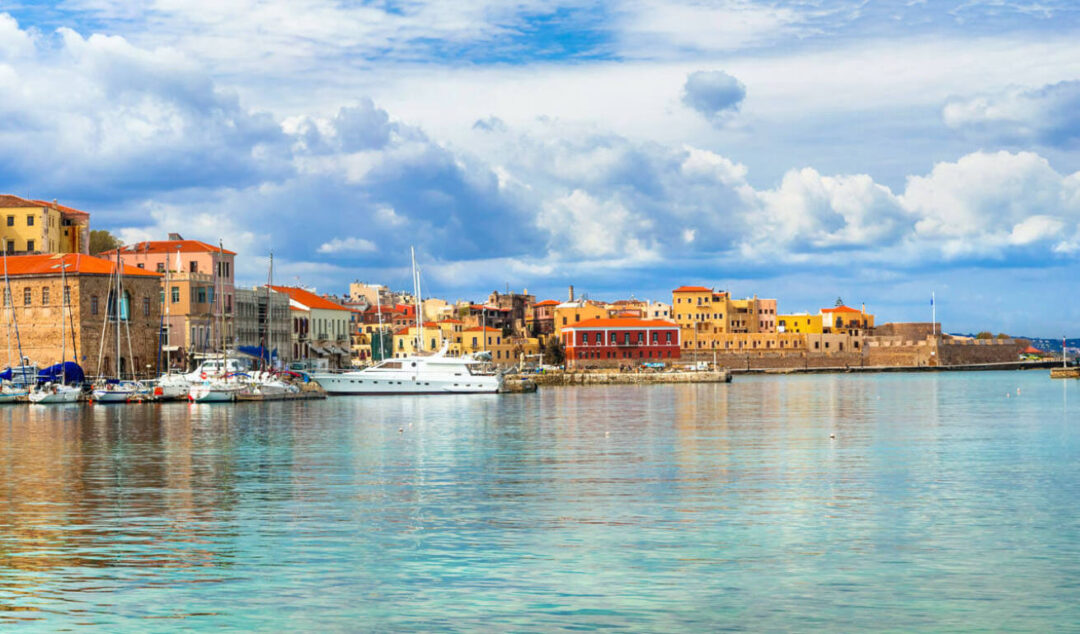
Chania is a vibrant student city where history, innovation, and natural beauty meet. An inspiring Mediterranean destination offering exceptional quality of life and outdoor experiences. (Photo: https://www.visitgreece.gr/)
Read more:
https://www.visitgreece.gr/islands/crete/chania/
TAGS: CRETE | EDUCATION | STUDY IN GREECE | UNIVERSITIES