
Study in Greece’s second Greek University Panorama in the Balkans brought university representatives to Albania and North Macedonia, highlighting strong interest in Greek higher education and new opportunities for international student recruitment.
Study in Greece has successfully completed the second edition of the Greek University Panorama in the Balkans, held from 13 to 18 October 2026 in Albania and North Macedonia. The initiative brought together representatives of the University of Macedonia, Aristotle University of Thessaloniki and the National and Kapodistrian University of Athens, in cooperation with the Embassies of Greece in Tirana and Skopje.
Through school visits, dedicated information events and participation in international study fairs, the roadshow introduced prospective students to English-taught undergraduate programs and explored the broader potential of Greek higher education in neighboring countries. Strong attendance and considerable interest across the activities highlighted the value of sustained outreach in a region where geographical proximity, existing familiarity with the Greek language and the appeal of accessible, high-quality university education create significant opportunities for international recruitment.
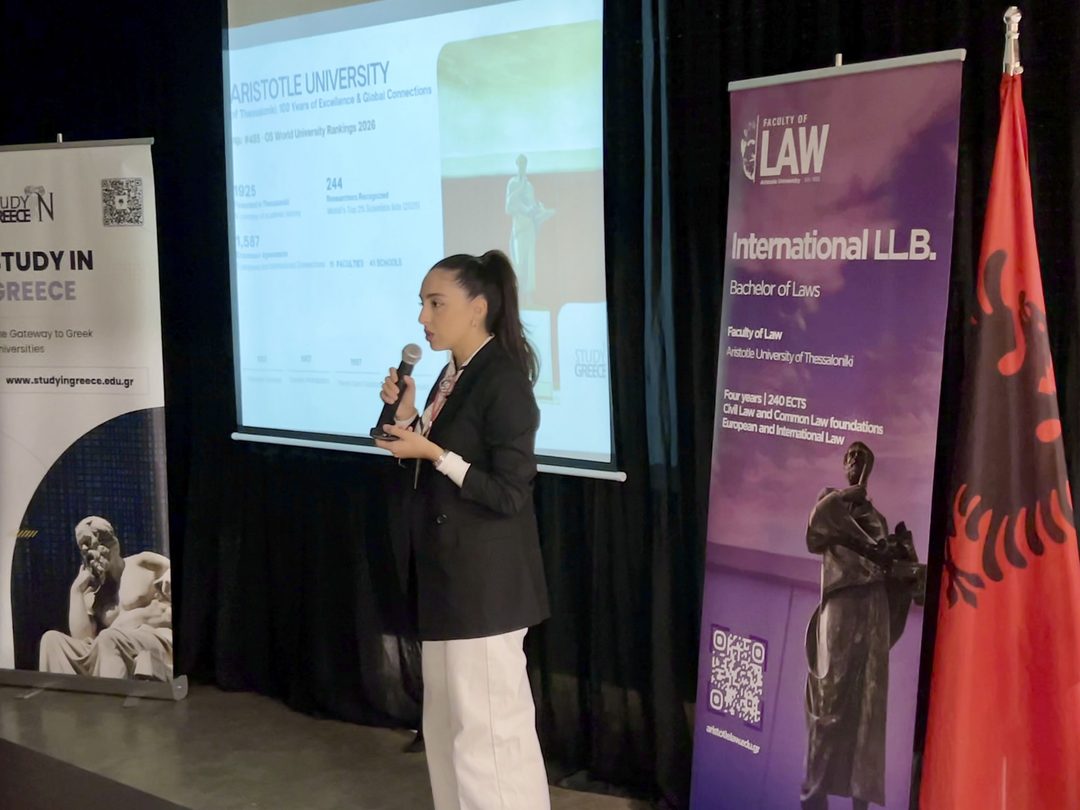
Albania: Bringing Greek University Opportunities Closer to Students
In Tirana, Study in Greece visited three educational institutions: Protagonists High School, which also incorporates Logos University College; Arsakeio High School of Tirana; and the British School of Tirana.
The visits provided an opportunity to introduce students to undergraduate study options in Greece, present programs taught in English and encourage direct discussion about pursuing university studies in a neighboring country. Engagement with school communities is an important part of international student recruitment, enabling prospective students to explore academic pathways and access information to help guide their future decisions.
The response to the roadshow also reinforced the importance of maintaining a consistent presence in Albania. Returning to the country following the first Greek University Panorama in the Balkans in spring 2026 enabled Study in Greece to build on previous contacts, establish new connections and further raise awareness of the opportunities offered by Greek universities.
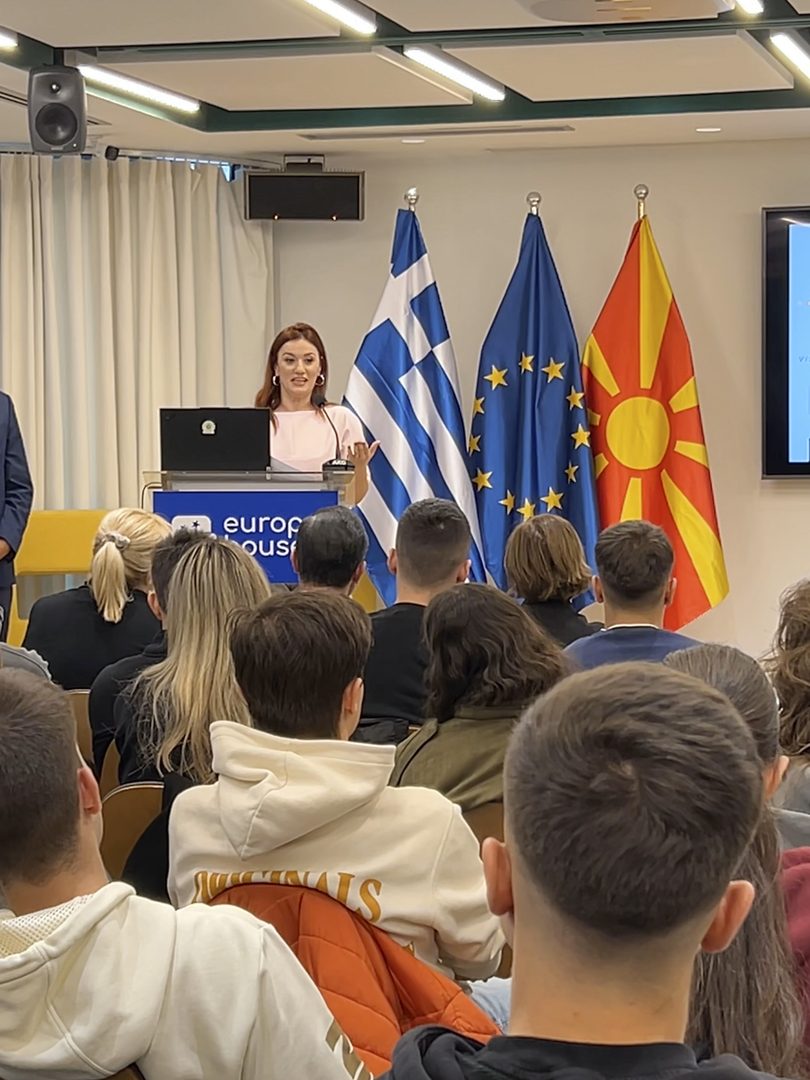
From Bitola to Skopje: Greek Universities Attract Strong Interest
In North Macedonia, Study in Greece participated in the “Study Opportunities in the EU” fair at Bitola Europe House, alongside representatives of France, Germany, Austria and Bulgaria. The event offered prospective students the opportunity to explore study destinations across Europe and learn more about academic opportunities at Greek universities.
The roadshow continued on Friday, 16 October, with a successful visit to Zef Lush Marku High School, an Albanian-language school in Skopje, followed by a dedicated Study in Greece information event at Skopje Europe House. The event attracted a particularly strong turnout, giving students and families the opportunity to learn about Greek higher education and speak directly with representatives of the participating universities.
Over the weekend, Study in Greece also took part in two international study fairs organized by the Educational Advising Center (EAC) and Future Option. The Greek university stands attracted considerable attention, drawing strong interest alongside institutions representing established international study destinations, including the United Kingdom, Australia, France and Germany.
The response at these fairs highlighted the potential for Greek higher education to gain greater visibility alongside well-established international destinations. By showcasing the quality, accessibility and diversity of their academic offerings, Greek universities demonstrated their potential to attract prospective students in an increasingly competitive international education landscape.
Combined with the strong turnout at the Skopje information event, the interest recorded throughout the roadshow points to promising opportunities for Greek universities to expand their presence in North Macedonia and strengthen their engagement with prospective students and their families.

Beyond English-Taught Degrees: Unlocking the Potential of Greek-Language Education
One of the key opportunities highlighted by the roadshow is the potential to attract more international students to Greek-taught university programs. In both Albania and North Macedonia, prospective students include people who already speak Greek, as well as those willing to learn the language to pursue their academic ambitions in Greece.
This interest creates an opportunity to broaden international recruitment beyond English-taught degrees and make greater use of the linguistic and cultural ties connecting Greece with its neighbors.
In Bitola, the Pelagonia Association, which offers Greek-language courses and operates as an examination centre certified by the Hellenic Ministry of Education, provides an established point of reference for language learning and certification.
Closer links between local educational initiatives of this kind and Greek universities could help establish clearer pathways for prospective students interested in pursuing degrees in Greek. Realising this potential would also require examining the admission capacity available to international students in Greek-taught undergraduate programmes. In particular, the current limit of 1% of international students per undergraduate programme raises the question of whether existing provisions could be expanded to accommodate growing interest.
Developing these pathways would support a more comprehensive approach to international student recruitment, encompassing both English-taught programmes and opportunities for students who wish to study in Greek.
Sustained Presence, Lasting Impact
The second Greek University Panorama in the Balkans underscored the importance of continuity in establishing Greece as a recognized destination for international higher education. Returning to Albania and North Macedonia just a few months after the first edition in spring 2026 enabled Study in Greece to reinforce its presence, build on previous outreach and maintain engagement with prospective students and local educational communities.
The strong attendance and interest recorded throughout the roadshow highlighted the potential for further growth, particularly for universities in Northern Greece, whose geographical proximity to both countries offers an additional advantage for students considering studying abroad.
By maintaining a consistent presence in the region and strengthening connections with schools, educational organizations and prospective students, Study in Greece aims to raise awareness of the quality, accessibility and diversity of Greek higher education. The Greek University Panorama in the Balkans forms part of these broader efforts to expand the international reach of Greek universities and build lasting connections with prospective students across the region.
Source: Study in Greece