
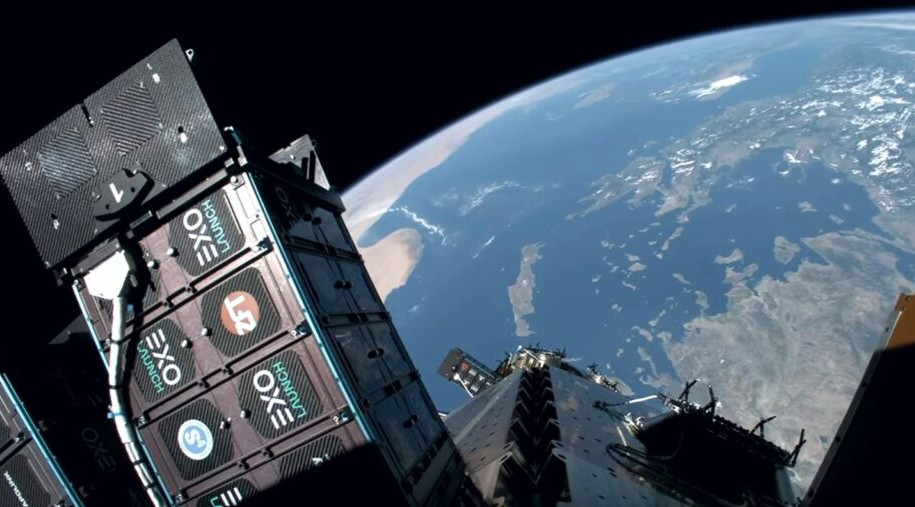
A new chapter in the development of Greece’s space infrastructure has begun with the successful launch of the Hyperion GR-1 microsatellite, the first Greek optical microsatellite developed under the National Microsatellite Program. The satellite was placed into orbit around Earth on Tuesday, July 7, following its launch aboard a SpaceX rocket from Cape Canaveral Space Force Station in Florida. This milestone gives Greece, for the first time, its own national optical Earth observation capabilities.
The launch marks the beginning of the operational deployment of a Greek constellation of seven optical microsatellites, all of which are being built in Greece by Open Cosmos Aegean. The initiative is a strategic investment aimed at strengthening the Greek public sector’s capabilities in areas such as civil protection, environmental monitoring, maritime surveillance, precision agriculture, and the protection of critical infrastructure.
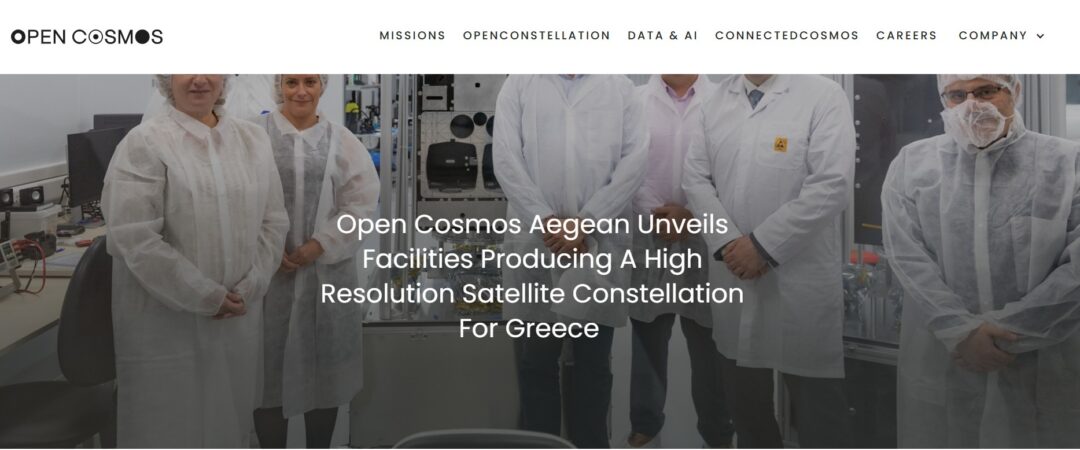
Open Cosmos Aegean is implementing a critical part of the National Microsatellite Program, manufacturing 7 cutting-edge satellites (out of a total of 13 in the national program) in Greece, in state-of-the-art facilities in Pallini, which include 300 m² clean rooms and capabilities for comprehensive satellite design, assembly, integration, testing and operation. In addition, Open Cosmos Aegean has undertaken the construction and operation in Greece of a satellite ground station to provide telemetry, remote control and data transfer services for the entire constellation.
Hyperion GR-1 is equipped to capture high-resolution multispectral imagery with a ground sampling distance of up to 90 centimeters, enabling the systematic observation and monitoring of changes in both natural and built environments. The satellite also incorporates artificial intelligence (AI)-powered onboard data processing and inter-satellite communication links (ISLs), allowing for faster processing and transmission of critical information to ground stations. The data collected by the microsatellite will be integrated into Greece’s Government Earth Observation Hub, which is being developed as the country’s central digital platform for managing and exploiting satellite-derived information across the public administration.
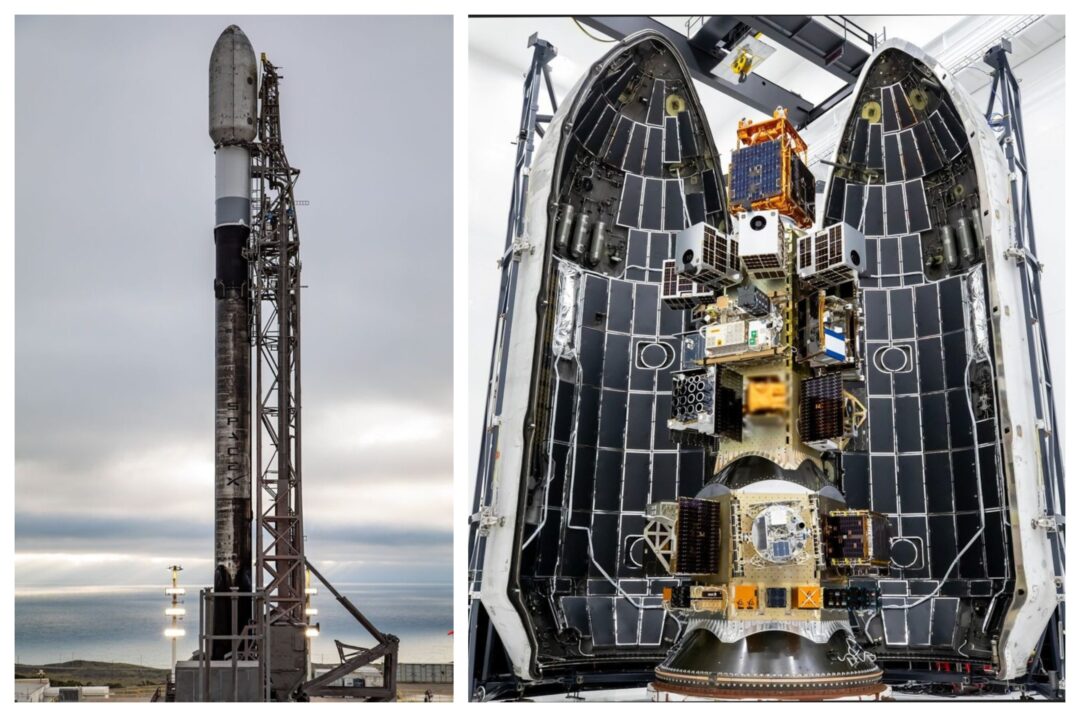
With the launch of Hyperion GR-1, Greece now has a total of 18 microsatellites in orbit, as part of its broader strategy to develop national space infrastructure
According to the plans of the Ministry of Digital Governance and Artificial Intelligence, the system’s applications will range from the early detection of wildfires and floods to post-disaster damage assessment, as well as the protection of forests and water resources, precision agriculture and aquaculture, and maritime surveillance, including vessel tracking and the detection of marine pollution incidents. In addition, the satellite data is expected to support urban planning, the monitoring of major infrastructure projects, and the inspection of critical infrastructure, strengthening the government’s ability to make informed decisions based on up-to-date geospatial information.
Hyperion GR-1 is the first of seven optical microsatellites being developed under Greece’s National Microsatellite Program, which is funded through the “Greece 2.0” Recovery and Resilience Facility. The program is being implemented by the General Secretariat of Telecommunications and Posts, with the support of the Hellenic Space Center (HSC) and the European Space Agency (ESA).
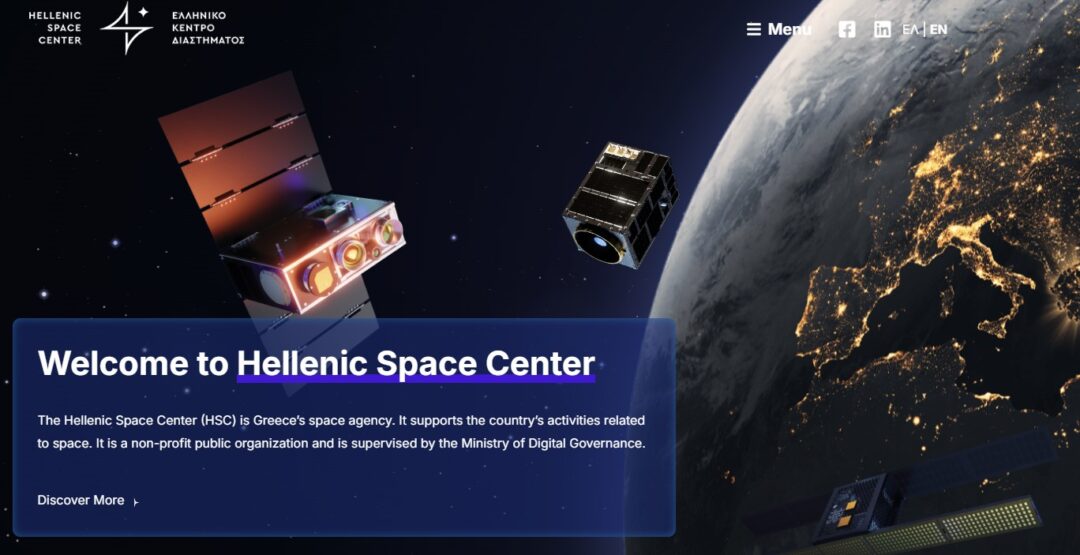
The Hellenic Space Center (HSC) is Greece’s national space agency, responsible for coordinating the country’s space policy, supporting the development of its space sector, and representing Greece in international space activities. Established in 2018, the HSC works under the supervision of the Ministry of Digital Governance and Artificial Intelligence and collaborates closely with the European Space Agency (ESA), of which Greece has been a member since 2005. The HSC plays a central role in planning and implementing Greece’s national space strategy. Its responsibilities include promoting satellite technologies, supporting research and innovation, strengthening the domestic aerospace industry, and encouraging participation by Greek companies and universities in European space programs. The agency also helps expand the use of satellite data in public services, including environmental monitoring, disaster management, maritime surveillance, precision agriculture, and urban planning.
Particular emphasis has also been placed on the involvement of the Greek aerospace industry in the development of Hyperion GR-1. According to the announcement, the satellite was built with the participation of Greek companies and engineers, helping to strengthen domestic expertise and laying the groundwork for the development of exportable space technologies and services.
The Greek government has already outlined the next phase of its space strategy through the HELLAS-SPACE 2.0 program, with a total budget of €350 million. The initiative aims to significantly expand the country’s capabilities in the space sector over the coming years.
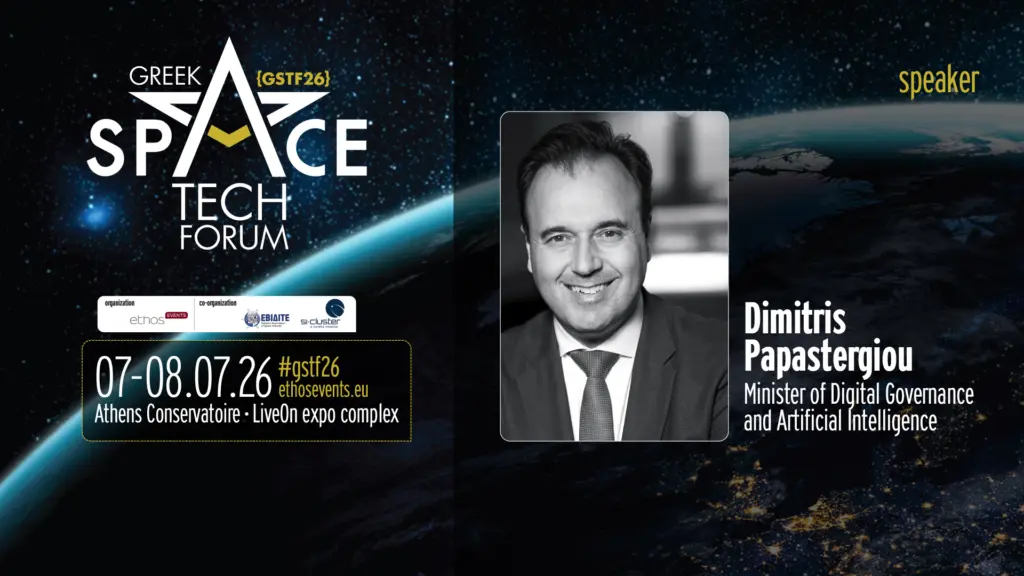
The Greek Space Tech Forum 2026 (GSTF26) is one of Greece’s leading events dedicated to the rapidly growing space sector, bringing together government officials, industry leaders, researchers, investors, startups, and European institutions. Held in Athens on 7–8 July 2026, the forum focused on strengthening Greece’s role in the European space economy and advancing national capabilities in satellite technologies, Earth observation, artificial intelligence, defence and dual-use applications, climate resilience, and commercial space innovation.
Minister of Digital Governance and Artificial Intelligence Dimitris Papastergiou stated that “the launch of Hyperion GR-1 marks a new era for our country. We are acquiring another powerful tool that will enable us to use satellite data for the benefit of our citizens: to protect our forests and maritime areas, support precision agriculture, map both regulated and unregulated development, and make faster decisions during times of crisis.” He added that the launch forms part of a broader national strategy, referring to the recent unveiling of the HELLAS-SPACE 2.0 program, with a €350 million budget, which builds on the National Microsatellite Program. “Our goal is for technology to make the state more effective, the country more resilient, and the everyday lives of citizens better,” he concluded.
(Source: https://www.amna.gr/ )
Read also:
TAGS: DIGITAL TRANFORMATION | MICROSATELLITES | SPACE