One of the leading pillars of Greek science, the National Centre for Scientific Research “Demokritos”, celebrates 65 years of continuous contribution this year.
Founded in 1961 as the Nuclear Research Centre, with the primary mission of advancing nuclear research for peaceful purposes, “Demokritos” has since evolved into a modern, multidisciplinary research organization. Today, its activities span an exceptionally broad range of scientific fields, from nuclear and particle physics, advanced materials and semiconductors to networks, telecommunications, biotechnology, artificial intelligence, quantum technologies, energy, the environment and cultural heritage.
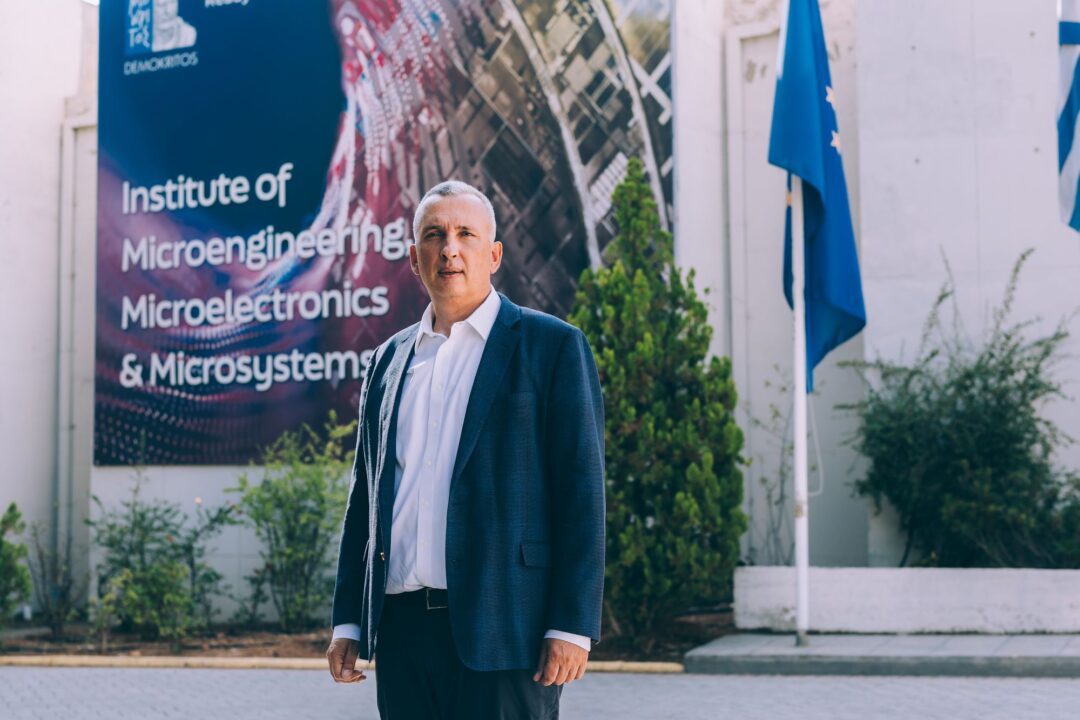
Dr Vangelis Karkaletsis, Director and Chairman of the Board of the Centre, discusses the power of interdisciplinary collaboration, the role of its newly established Institutes and the future of Greece’s research ecosystem.
“Demokritos” celebrates its 65th anniversary this year. What does its journey reveal about Greece’s research and technological capabilities, from its founding to the present day?
The story of “Demokritos” began in 1961, when Greece made a bold investment in nuclear research for peaceful applications and in the development of new scientific infrastructure. It was a pioneering decision for its time.
Sixty-five years later, the evolution of “Demokritos” stands as testament to the long-term value of investing in research and, above all, in the people who drive it forward. Its journey demonstrates that Greece has the human capital needed to conduct world-class research and continually expand its scientific horizons.
Today, knowledge, technology and innovation are directly linked to a country’s productive capacity, competitiveness and resilience, as well as to the quality of life of its citizens. This progress, of course, must be accompanied by ethical responsibility and serve human well-being and environmental sustainability.
Sustained investment in research is therefore a strategic choice for Greece. It enables us to generate new knowledge, develop technologies, participate in international scientific advances and respond to society’s needs over the long term.
Could you give us an overview of “Demokritos” today? What kind of research and activities are being carried out across its laboratories?
“Demokritos” is Greece’s largest multidisciplinary research center. It is a public research organization situated on an approximately 600-acre campus covered by pine forest in Agia Paraskevi, Athens. Today, it employs more than 1,200 people across its research, technical and administrative departments.
Our work involves generating new knowledge through fundamental research and developing cutting-edge technologies, with the ultimate aim of translating them into practical applications that benefit society and the economy.
Our research is funded through competitive national and European programmes, partnerships with industry and public-sector funding.
Could you tell us more about the cutting-edge technologies you are developing and the sectors in which their application is a priority?
One particularly important area is quantum technologies. In 2022, Greece’s first Institute of Quantum Computing and Quantum Technology was established at “Demokritos”, focusing on one of the most rapidly expanding fields of scientific research.
Its primary objective is to conduct high-level fundamental research and connect it with Greek industry, with a view to developing dual-use applications in both the civilian and defense sectors.
Artificial intelligence and telecommunications are also important areas of activity, pursued at the Institute of Informatics and Telecommunications.
At “Demokritos”, we have been working in AI for many decades, long before the current surge of interest in the field. Personally, I have been working in AI since the early 1990s, while researchers at the Centre had already been exploring AI as far back as the 1970s.
Today, we draw on this accumulated expertise across a range of sectors, from healthcare to climate change.
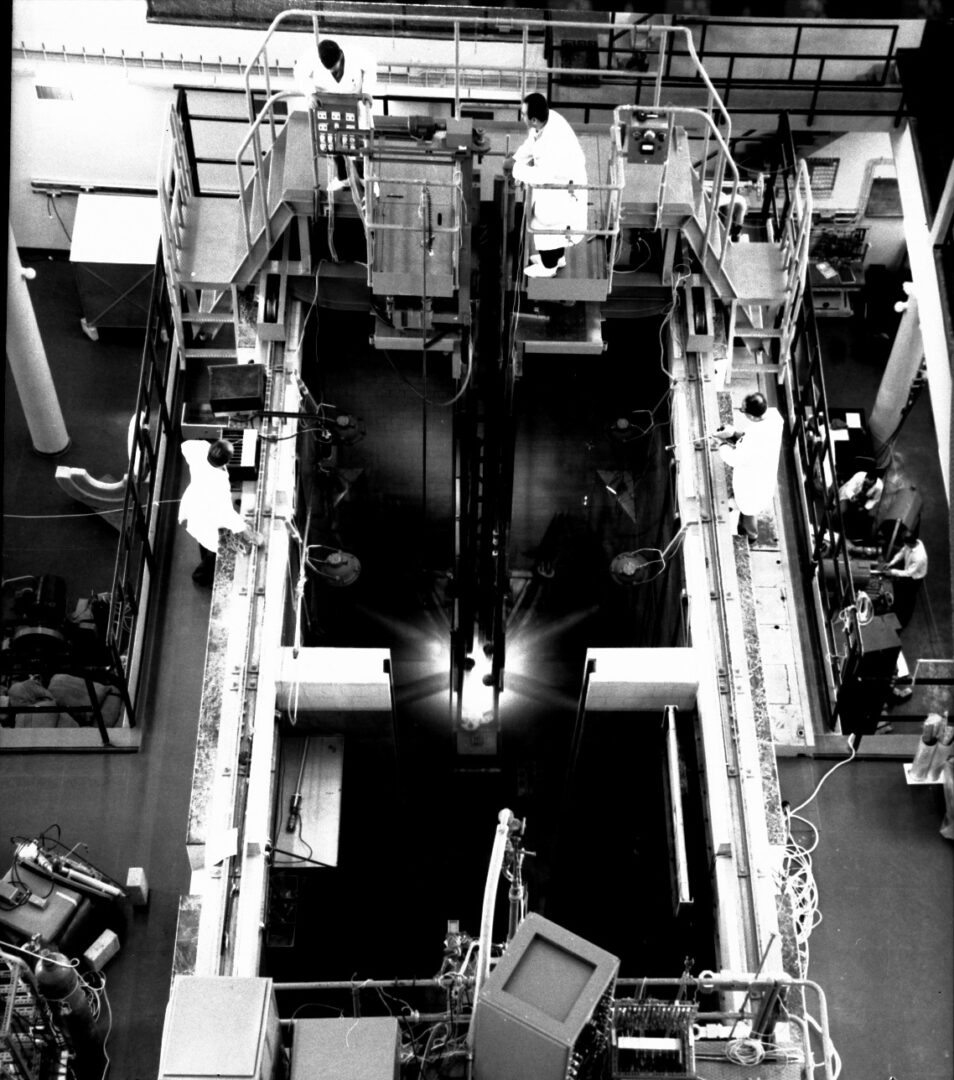
Naturally, we also retain considerable expertise in nuclear technology, developed through the many years of operation of the “Demokritos” research nuclear reactor (GRR-1), which operated from 1961 to 2004, as well as through our work in radioactive waste management.
This experience has given us an in-depth understanding of the requirements involved in every stage of a nuclear facility’s life cycle, from design and construction to operation, maintenance, permanent shutdown and decommissioning.
At the same time, we are delighted to be embarking on a collaboration with the Massachusetts Institute of Technology (MIT) to provide Greek researchers with training in nuclear technology.
At the Institute of Nanoscience and Nanotechnology, our research focuses on advanced materials, microelectronics and semiconductor technologies, with applications in sensors, microchips and photonic devices.
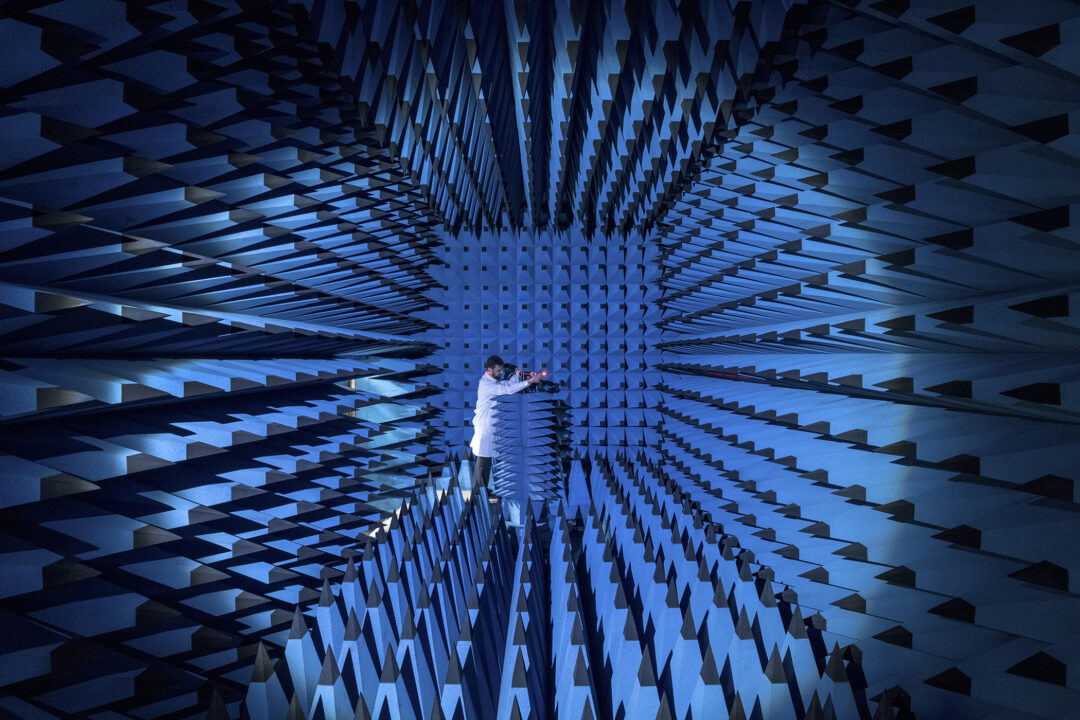
Energy, the environment and tackling the climate crisis are also among our key priorities.
In the field of clean energy, the Institute of Nuclear and Radiological Sciences and Technology, Energy and Safety has developed Greece’s first integrated hydrogen refueling station for light vehicles. The facility produces green fuel through electrolysis powered by solar energy.
The same Institute also contributes to atmospheric research through the Helmos Atmospheric and Climate Change Research Station, where scientists study airborne particulate matter and its impact on the climate.
At the same time, artificial intelligence is opening up new possibilities for environmental monitoring and civil protection. For example, combining satellite imagery with data from ground-based sensors and meteorological forecasts can help identify potential threats at an early stage, including the detection of smoke in forests.
We are also planning to host an international conference in Athens in October 2027, the AI for Climate Summit, which we hope will become an important meeting point for the development of solutions focused on reducing emissions, climate adaptation and addressing the energy footprint of data centers. The Summit will draw on the scientific expertise and research capabilities of “Demokritos”.
Another immediate priority is healthcare. Our research in this field ranges from understanding the underlying mechanisms of diseases to developing new diagnostic and therapeutic approaches.
At the Institute of Biosciences and Applications, researchers investigate the molecular mechanisms of ageing and disease, laying the groundwork for new therapeutic approaches.
At Institute of Nuclear & Radiological Sciences & Technology, Energy & Safety, radiopharmaceuticals are developed and evaluated for diagnostic purposes and targeted treatment, particularly in cancer care. Meanwhile, research into hereditary predisposition helps identify increased health risks and supports the development of personalized prevention and treatment strategies.
In parallel, the Institute of Informatics and Telecommunications employs artificial intelligence to analyze biomedical and clinical data, gain deeper insights into disease progression, and explore new therapeutic applications for existing medicines
Finally, defense innovation is another area of particular interest to us.
We collaborate with the Ministry of National Defense and host one of the accelerators of NATO’s DIANA programme.
Since January 2025, the Centre has been home to Greece’s first accelerator dedicated to dual-use technologies, supporting companies developing advanced technologies with applications in both the civilian sector and national defence.
We also participate in European research programmes funded by the European Defense Fund.
You have described an exceptionally broad range of research activities and scientific fields. How can all these different areas be brought together?
The strength of “Demokritos” lies in its interdisciplinary approach and its ability to bring together different scientific disciplines to address issues that matter to society.
On our campus, researchers from diverse fields exchange knowledge, tools and ideas, working together to tackle common challenges.
This is particularly important because the major challenges of our time, including those in the areas we have already discussed, cannot be addressed through the perspective of a single scientific discipline.
There are also less widely known synergies, some with a long history and others more recent, which bring together fields that one might not ordinarily expect to intersect.
I am referring, in particular, to culture and our long-standing collaboration with the Ministry of Culture.
How does “Demokritos” contribute to the field of culture? Could you share some specific examples of its work in this area?
Archaeometry, materials science and digital technologies enable us to understand how the works of the past were created, protect them and explore new ways of experiencing and interpreting them.
Let me give you two examples.
Through the X-ray Fluorescence Spectrometry (XRF) Laboratory of the Institute of Nuclear and Particle Physics, the Centre contributes to the scientific investigation and documentation underpinning the digital restoration of the hunting fresco in the tomb of Philip II at Aigai (Vergina). This is the largest surviving painting of the classical world discovered to date.
Our analyses reveal valuable information about the colors, materials and techniques employed by ancient painters.
Similarly, the Centre participates in the scientific investigation of the Kasta Tomb at Amphipolis, combining spectroscopic analyses and dating techniques and drawing on the extensive archaeometric expertise accumulated by our research teams over many years.
At the Institute of Nanoscience and Nanotechnology, the Ceramics and Composite Materials (CCM) group studies the materials used in monuments and the mechanisms that cause their deterioration, while also developing compatible materials for their conservation.
Through the HERISKTAGE project, in collaboration with INRASTES and the Ministry of Culture, we brought together data on materials, microclimates and climate change, with the aim of developing preventive approaches to the protection of monuments.
Under the European SINCERE project, which is coordinated by “Demokritos”, we are developing solutions to improve the energy efficiency of historic buildings while respecting their original materials and architectural character.
There are also interdisciplinary research teams at “Demokritos” working to create entirely new cultural experiences.
One such example is the ARTIFACT (Artificial Intelligence for Culture) research group, which operates at the intersection of technology and culture.
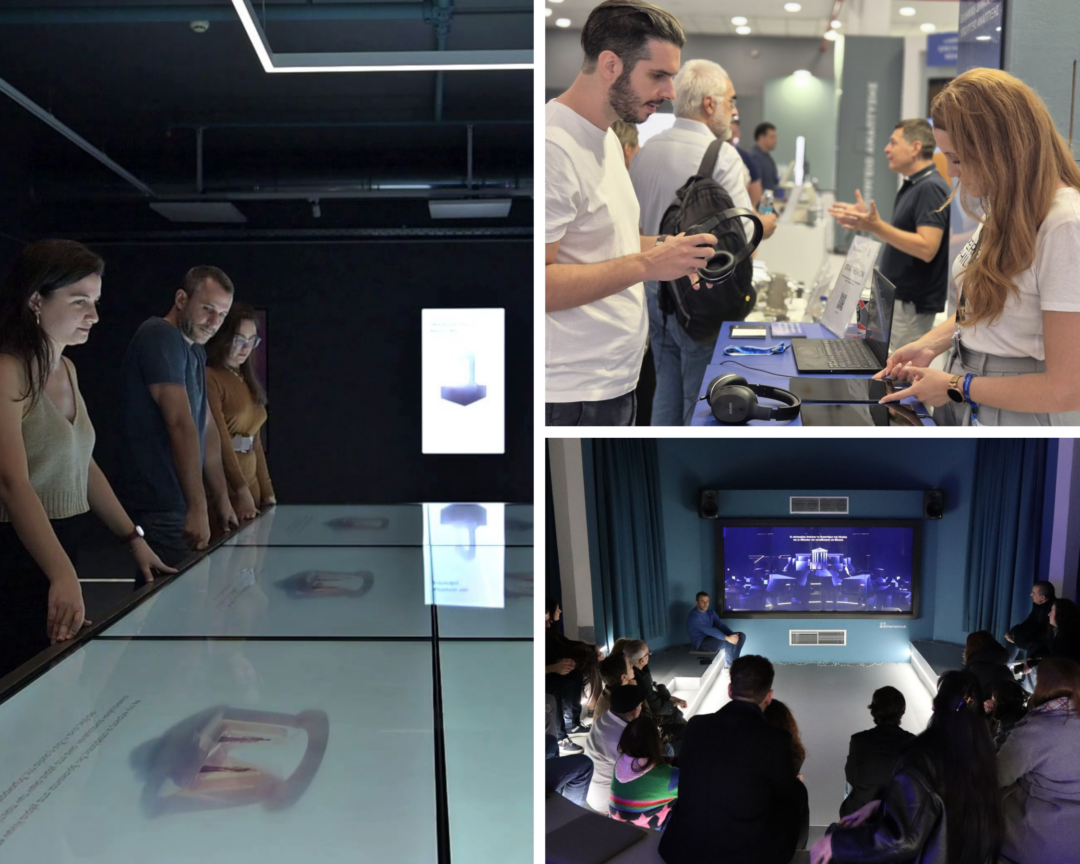
At the Athens Conservatoire, next to the archaeological site of Aristotle’s Lyceum, this group operates the interactive space AiTHERION, in collaboration with the Ministry of Culture. The space is open to school groups and the general public.
Through its exhibition “Democracy and Eudaimonia”, visitors are invited to engage with questions that have regained particular relevance in the age of emerging technologies, especially artificial intelligence. These include fundamental questions about knowledge, decision-making, human responsibility and the ethical implications of technology.
Furthermore, together with the architectural firm Foster + Partners and the World Human Forum, we are designing a digital experience exploring the life and work of Aristotle within the archaeological site of the Lyceum.
Our dialogue also extends beyond the Mediterranean through an annual interdisciplinary gathering entitled The Lyceum Project, which we organize with the invaluable contribution of our partners.
This gathering offers an opportunity to use transformative technologies such as artificial intelligence to revisit timeless philosophical questions here in Greece, in the very place where they first emerged, and to examine them through the lens of our own era.
In this way, ancient Greek thought can make a meaningful contribution to contemporary discussions about ethics and our responsibility to develop technologies that serve human well-being and contribute to protecting our planet.