The Lavrio Technological and Cultural Park was established in 1992 on the site of the former French Mining Company of Lavrio (Compagnie Française des Mines du Laurium), on the initiative of the National Technical University of Athens (NTUA). Its primary objective was to provide a home for research activities and entrepreneurial initiatives, fostering innovation and technological development.
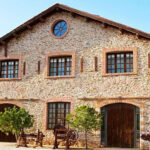
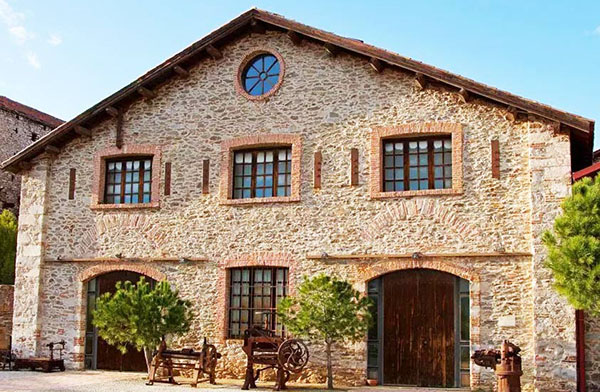
The Park’s facilities comprise industrial buildings, laboratories and professional spaces of exceptional architectural and aesthetic value, most of which were constructed between 1875 and 1940. The complex includes administrative buildings and industrial installations formerly used for mineral processing and beneficiation, which remained operational until 1988. Throughout approximately 120 years of industrial activity, the buildings underwent extensive modifications, renovations and expansions to accommodate the evolving needs of technological progress.
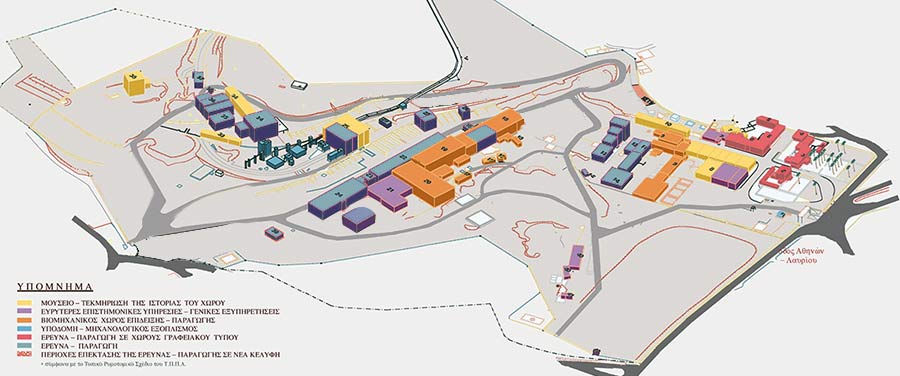
Today, the Park occupies an area of approximately 245,000 m² and comprises 41 buildings, with a total built area of 25,000 m². The entire complex has been designated a protected historical monument by the Ministry of Culture. To date, 80,000 m² of the site, including several buildings, have been restored, establishing the Lavrio Technology and Cultural Park as a unique landmark of industrial archaeology and architecture.
The National Technical University of Athens, with the support of the local community, has played a key role in revitalizing the former industrial facilities and transforming them into a center for the development and application of innovative products, as well as technological, educational and cultural activities.
The fundamental principle underpinning the NTUA’s vision is that:
“As an educational institution, it does not approach or develop technology in the same way as the market. A technological educational institution generally regards technology primarily as a particular form of thinking, combining skills, insight, foresight and creative imagination, rather than simply as an asset to be commercially exploited and incorporated into production processes.”
In this spirit, the Lavrio Technology and Cultural Park was conceived not merely as a profitable engine of local macroeconomic development, but as a socially structured instrument for promoting and enhancing intellectual and cultural activities, which constitute a fundamental pillar of the new economy.
More than 20 organizations and institutions are currently permanently based at the Park. They fall into three main categories:
- Innovative enterprises engaged in the production, development and application of ideas, products and services in the field of modern technologies.
- NTUA laboratories, dedicated to leveraging the expertise and know-how developed within the University and transferring this knowledge from academia to businesses and society.
- Educational institutions, including the Lavreotiki Environmental Education Centre and the Museum of Industrial and Craft Education.
In addition, the Park regularly hosts and organizes scientific, research and educational activities, including conferences, seminars, academic meetings, corporate meetings and trade fairs, alongside a wide range of cultural events and activities.
The complex has also become an established filming location, serving as a setting for films and other audiovisual productions.
Through its development, activities and collaborative initiatives, the Lavrio Technological and Cultural Park makes a continuous and significant contribution to promoting and disseminating the distinctive history of the wider Lavreotiki region. At the same time, it serves as an important innovation hub in the Attica region and a key driver of development and growth for the wider area of Lavrio.
History – Lavrio and the Ancient World
Lavrio was one of the most important newly established towns in Greece during the nineteenth century, attracting considerable international attention. It was the first purpose-built workers’ settlement in the newly established Greek state, developed according to the model of the so-called company town. The founding of Lavrio and the exploitation of its rich mineral resources were closely linked to the efforts of the young Greek state in the nineteenth century to develop its natural resources and industrial sector.
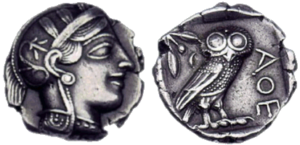
The Athenian tetradrachm (5th century BC)
Mining activities in the area date back to before 3000 BC, when the ancient Greeks first began exploiting its mineral resources. The systematic and intensive extraction of silver and lead began with the establishment of Athenian democracy in 508 BC.
The silver extracted from the mines of Lavrio, together with the contributions paid by allied city-states, provided the financial resources necessary for the construction of the magnificent monuments of Periclean Athens’s Golden Age, as well as for financing Athens’ military fleet during the Persian Wars.
Following the Classical period, all significant mining and metallurgical activity in the region came to an end, ushering in many centuries of silence.
Technology and Innovation
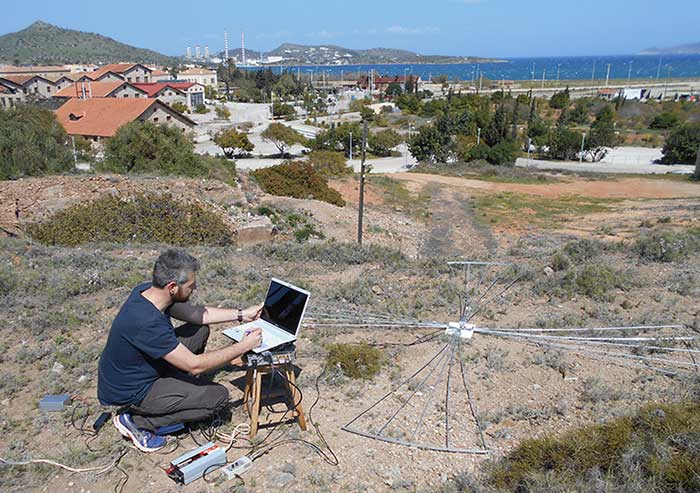
Since its establishment, the Lavrio Technological and Cultural Park has supported young Greek scientists by providing them with opportunities to test and apply their research findings in real-world conditions.
It is a place where knowledge and technology are generated and put into practical application. The Park also hosts several major large-scale research projects undertaken by the National Technical University of Athens.
Furthermore, it provides a platform for presenting and demonstrating innovative technologies and products, while serving as an enduring link between NTUA and Greek society as a whole.
The Park’s activities provide a springboard for new enterprises operating in advanced technology sectors, helping transform research and innovation outcomes into successful commercial and entrepreneurial ventures. Through its infrastructure and support services, the Park makes a substantial contribution to accelerating the establishment, consolidation and growth of emerging businesses.
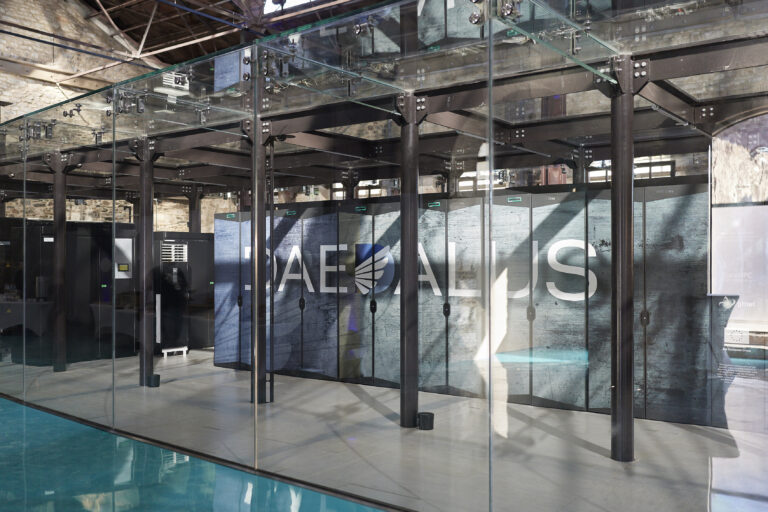
The Lavrio Technological and Cultural Park is also home to DAEDALUS, Greece’s largest national supercomputer, inaugurated in October 2026.
Research and Education
The Lavrio Technological and Cultural Park of the National Technical University of Athens (NTUA) functions as a permanent hub for technological development, academic research and education. It also provides an ideal environment for studying and reassessing both the tangible and intangible dimensions of cultural heritage.
Today, high-level research is conducted within the Park by the institutions and organisations based there, as well as by the Park’s own staff, who actively participate in a variety of research projects.
A key objective is to establish the Park as a platform for experimentation and the generation of new knowledge, to harness the highly specialised expertise of its personnel and to promote research into the environmental rehabilitation of former industrial sites, with a view to restoring them and further improving their environmental quality.
The Park also houses a modern environmental monitoring laboratory, responsible for measuring key environmental indicators both within the Park itself and in support of the wider needs of the Lavreotiki region.
A wide range of educational activities are organised at the Park, including:
- Scientific conferences, lectures, academic meetings, seminars and workshops addressed to researchers, university students, school pupils and the wider public.
- Initiatives to establish links and coordinate activities with the laboratories and businesses based at the Park, promoting research and educational collaborations for students and young researchers.
- Guided tours for groups, offering visitors the opportunity to discover the history of the industrial complex and the surrounding region.
- Educational programmes, learning games, competitions and other educational initiatives.
Culture
The National Technical University of Athens, in collaboration with the local community, has undertaken a comprehensive cultural development initiative in Lavrio, encompassing several key areas:
- The safeguarding, conservation and restoration of an industrial monumental complex of outstanding national importance.
- The regeneration and adaptive reuse of the historic complex, giving it new productive, creative and sustainable functions.
- The preservation of the associated intangible heritage, the advancement of research in this field in collaboration with local, national and international institutions, and the dissemination of this heritage to society as a whole.
- The hosting, organisation and production of cultural and educational events and activities, with particular emphasis on a culture that supports technology and innovation and is, in turn, enriched by them.
- Support for young artists and scientists, as well as innovative cultural initiatives.
The Mining and Metallurgical Museum of Lavrio, currently under development within the historic Mechanical Workshops complex of the Lavrio Technological and Cultural Park, together with the organisation and development of the extensive Lavrio Industrial Historical Archive (1864–1981), is expected to significantly strengthen and broaden the cultural profile of the region.
Today, the Lavrio Technological and Cultural Park has become an important destination for a wide variety of cultural events.
Music concerts, scientific and artistic exhibitions, theatre performances, dance shows, film screenings, conferences, seminars, lectures, corporate events and many other activities take place in its conference and exhibition halls, as well as in its atmospheric outdoor spaces.
Over the course of its twenty years of operation, the Park has established itself as a vibrant meeting place for culture, creativity, science and innovation.
Sources: Lavrio Technological and Cultural Park; ERTnews.gr.