Category: Reading Greece

Loading
Reading Greece
Reading Greece11 hours ago
📚📚Οn the occasion of the publication of his first poetry collection "Karpathia" (Εκδόσεις Θίνες, 2025), Reading Greece spoke to Aggelos Bertos about the notion of "topos" in his work, and how it works as a symbolic or emotional space in his poetry.

"A place, especially one in the remote islands, constructs its own set of values, which mutate, evolve, and, in the end, co-shape the national narrative. Karpathia, then, is the mythologization of the island; a place where, through its own history, the margins haunt the center, and where the poetic subject, as an inhabitant of the frontier, has both the right and the voice to engage with the questions of the present".
Reading Greece
Reading Greece6 days ago
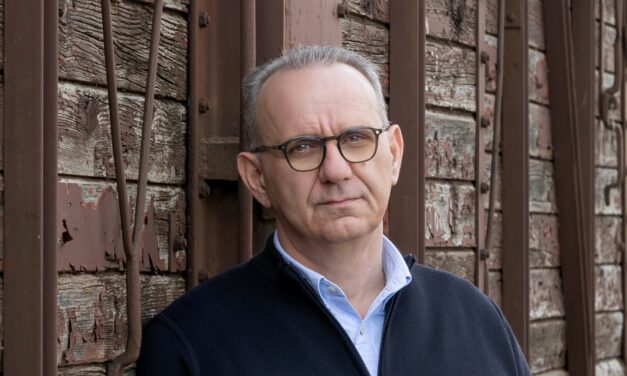
📚📚Can #literature, and especially crime fiction, be usesd to approach broader social issues? How does it converse with its surrounding reality?

On the occasion of the publication of his latest novel titled "Hidden Blood" (Εκδόσεις Μεταίχμιο - Ekdoseis Metaixmio, 2025), writer Tasos Papanastasiou attempted to answers these questions in an interview with Reading Greece.

"I see myself as part of the tradition of crime fiction that doesn’t seek to impress, but to reveal. In my view, there’s a fine line between stories that present crimes solved by a superhero detective, and stories in which the crimes emerge from historical, political, or social conditions, with the detective as part of that same world, subject to the same forces. Crime fiction can highlight social and political issues, while also offering the reader an engaging experience. That’s what I try to do with my work".
Reading Greece
Reading Greece1 week ago
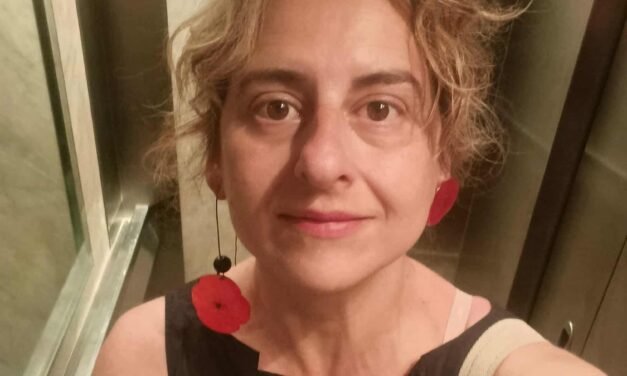
📚📚On the occasion of the publication of her latest book "The Eye of the Hippogriff", poet critical social psychologist and literary critic Maki Kostoula spoe to Reading Greece, among others, about the interrelation between poetry, psychology, discourse analysis and literary criticism".

""I think there is constant filtering and communication between psychology, discourse analysis, and literary criticism. What binds them are questions about critique itself – its forms, its limits, its performativity. I see the critical faculty as a continual exploration of reflexivity, a performative practice of transitions and dilemmas. The weaving together of the three – or rather four, if we add poetry – is activated through language use and through the shared understanding that language does things and is never neutral.

In the convergences of poetic and theoretical discourses, insights from social constructionism and discourse analysis traverse the various versions of myself. And although all these retain a fragmentariness that constantly escapes, the conversations between different discourses generate unpredictable shifts and open new possibilities for change — with a historicity that endures".