Category: Reading Greece

Loading
Reading Greece
Reading Greece5 hours ago
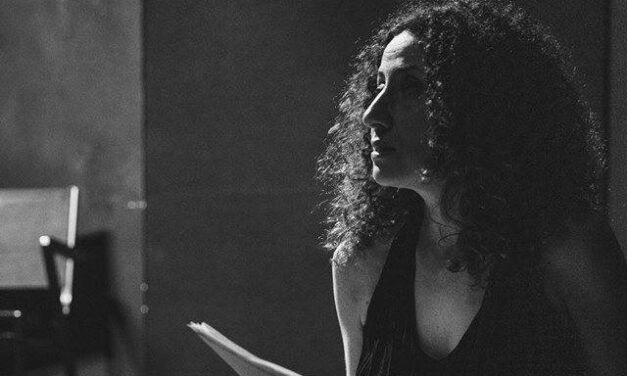
On the occasion of the publication of her latest book "Persephone in wolf's mouth" by Kichli Publishing, writer Dimitra Louka spoke to Reading Greece about the challenges in re-imagining ancient myths and mythological figures in contemporary settings.

"#Myths and symbols are primal forms from which endless stories can be born; they speak to us in subtle, subterranean ways, linking the individual to the collective fate, the present to its ancestral past. I feel the same is true of memory and identity: when we write “stories,” we are, in truth, trying to articulate who we are, what we carry with us, and what we long to forget. I return to these realms again and again because they offer me a way to better understand myself and the world. As for psychological introspection, it lies at the very heart of literary writing, which must illuminate the contradictions, the shadows, the hidden passions that pulse beneath every human experience".
Reading Greece
Reading Greece1 day ago
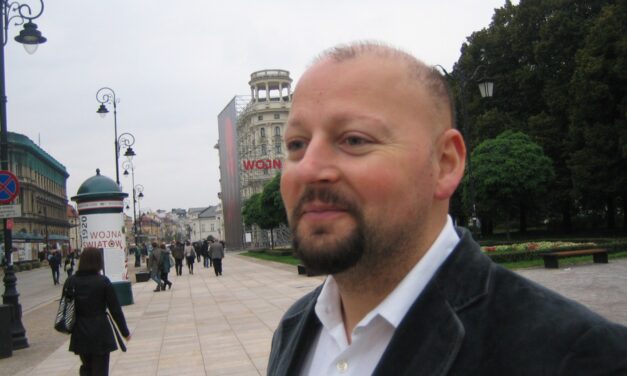
📚📚On the occasion of the publication of her latest writing venture "The only animal" (Γεννήτρια, 2025), Reading Greece spoke to playwright, writer and translator Natassa Sideri about the book and the main themes it delves into, literary language, and the meeting point between literature and theatre.

"When I see something on the street that is story material, it’s usually very clear to me what I should do with it. When I write theatre, the process starts and normally also ends with a question, specifically a question I don’t have an answer to, whether on or off stage. This question is then first delivered to the polyphony of the theatre, then to the actors and the director, and finally handed over to the public as a take-home gift. This is how theatre has worked since antiquity: as a place for asking difficult questions that could be neither raised nor answered anywhere else in the polis without creating havoc. Short stories, on the other hand, at least for me, provide this space of interiority that allows the reader to follow the character’s journey in a more intimate setting than the theatre, where the world that the work creates is invited to enter the room through the reader’s filtering of it rather than the actors’ boisterous voices and ever-present bodies".
Reading Greece
Reading Greece6 days ago
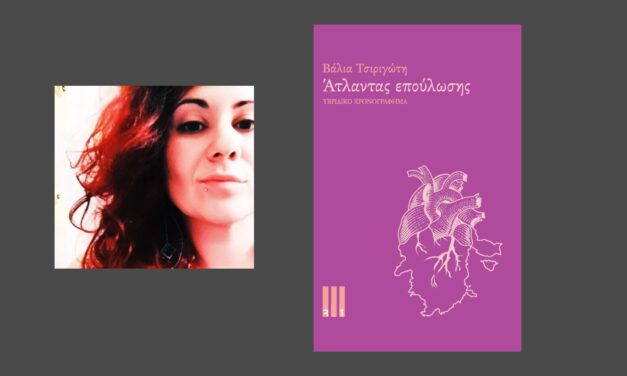
📚📚Can #literature act as a solace, as a refuge? On the occasion of the publication of her first writing venture "Atlas of Healing" (Τρι.ενα πολιτισμού, 2025), writer Valia Tsirigoti spoke to Reading Greece about a "literature of care" as an ethos of writing, and literary language as both a rupture and repair.

"I find it beautiful that, in our conversation, you place care and ethos within the same sentence. In Homeric times, the word ēthos meant dwelling, in a sense, a familiar place. For me, care is that familiar place. Familiarity itself is a co-creation. I do not believe in an ethos of writing as moral instruction, didacticism, or a prescribed ideological stance. What concerns me is a language that does not retraumatize or stigmatize its subjects. For me, that is also a political position. I am drawn to a language of liberation; one that is born through care".